

TL;DR
- Most SaaS content looks the same because teams copy differentiator playbooks by default.
- The 3 dimensions that matter most are positioning, complexity, and activation pattern.
- Different DNA combinations need different content mixes, formats, and audiences.
- Content strategy is downstream of product structure, not independent from it.
Why does every SaaS company seem to publish the same kinds of content?
Because many marketing teams inherit the same default template: best-practice listicles, product comparisons, category roundups, and generic thought leadership. That template is not wrong for every company. It is wrong for many of them.
A category creator needs to educate a market. A differentiator needs to help buyers compare. A niche specialist needs to sound native to a vertical. A complex product often needs content that acts like pre-sales. An instant-value product may not.
Once you classify the product properly, the content strategy usually gets simpler. The team stops trying to publish everything for everyone and starts building the specific content system that fits how the product is bought.
The 3 DNA Dimensions That Shape Content Strategy
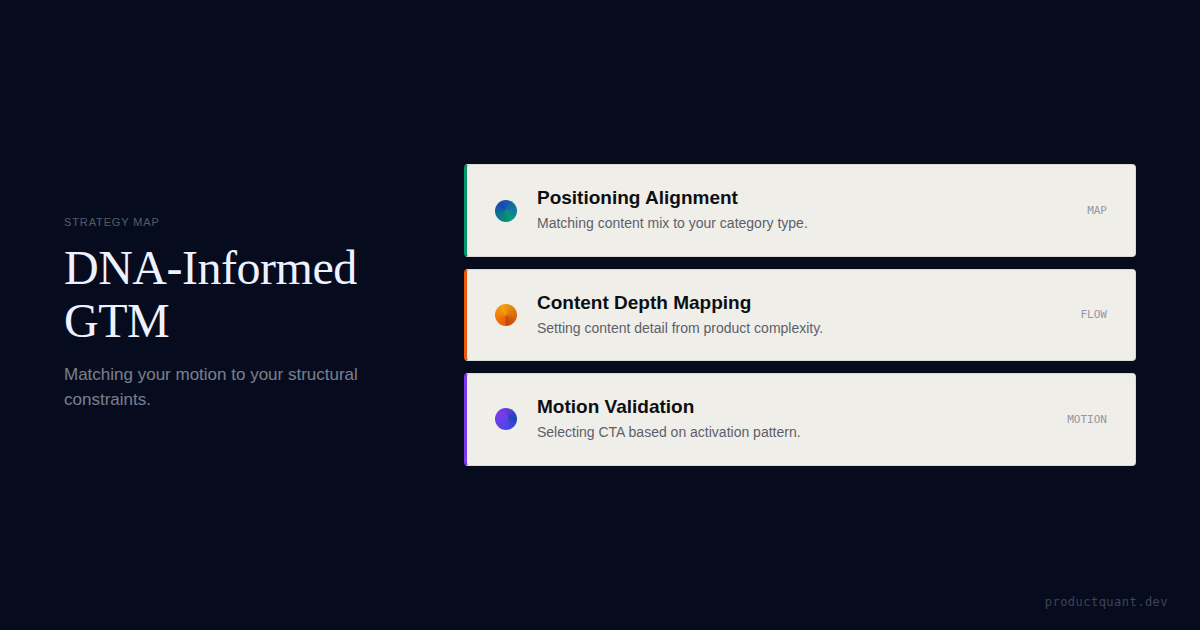
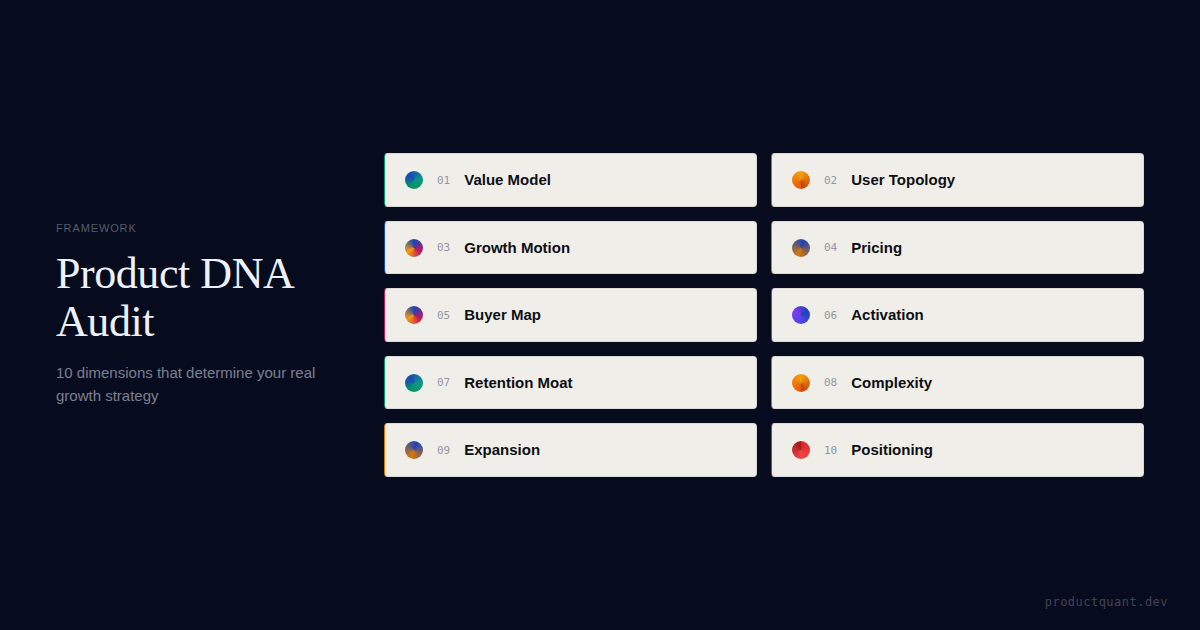
Three dimensions do most of the work here: competitive positioning, complexity, and activation pattern.
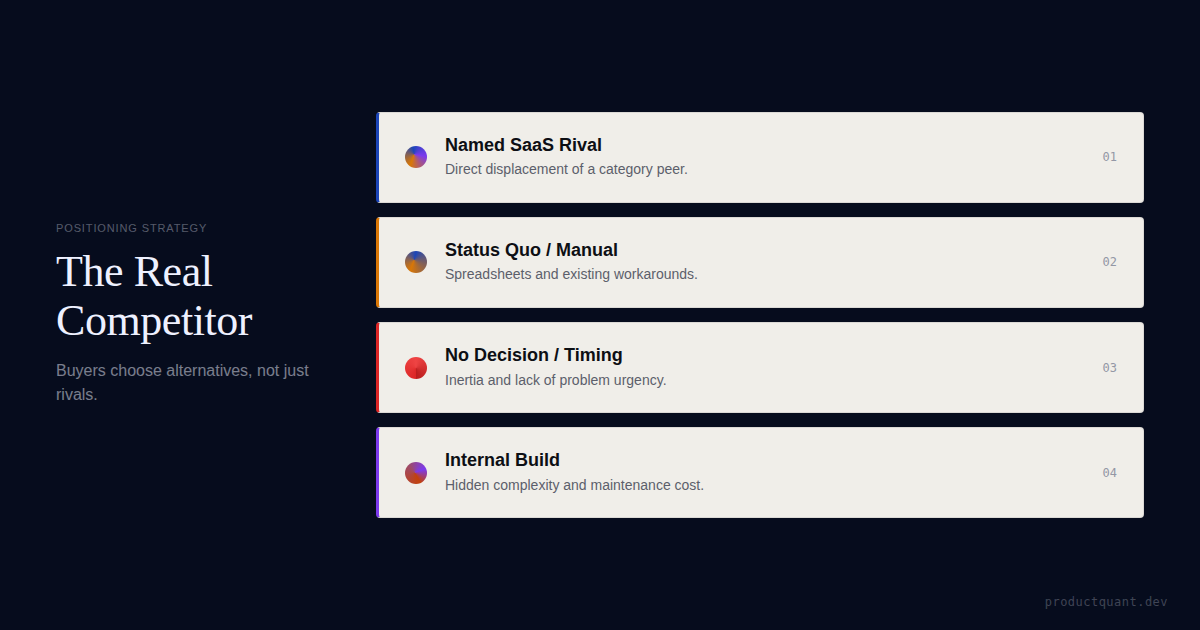
1. Competitive positioning
Category creators need education-heavy content. Differentiators need comparison and proof. Niche specialists need vertical resonance. Disruptors need content that emphasizes simplicity, access, and a different commercial model.
2. Complexity
Simple, fast-value products can rely on shorter, lighter, more product-adjacent content. Complex products need deeper content because buyers need more context before evaluation becomes credible.
3. Activation pattern
If the product activates instantly, content can drive directly to trial. If activation is team-dependent or integration-dependent, content has to serve the champion or technical buyer long before self-serve conversion becomes realistic.
Use the GTM article when content questions are really classification questions.
If the team is debating content formats and channels without agreement on positioning and buyer path, the DNA view is the better starting point.
How Different DNA Profiles Change the Content Mix

Once the dimensions are clear, the strategy writes itself more cleanly.
Category creator + complex + team-dependent
This profile needs educational content, deeper problem framing, and champion-enablement material that helps internal champions explain the product to others. This is usually the most expensive content profile.
Differentiator + simple + instant activation
This profile can rely more on comparisons, product-led content, migration pages, and shorter tutorials because the market already understands the category and the product can demonstrate itself quickly.
Niche specialist + complex + integration-dependent
This profile needs lower-volume, higher-precision content: vertical-specific guides, implementation detail, workflow content, and language that feels native to the buyer's actual operating context.
If a team uses a differentiator playbook for a category-creation problem, or a lightweight content program for a technically heavy product, the content will look active without being strategically useful.
What to Do Instead

If content is underperforming, do not start by changing the editorial calendar. Start by checking the product's structure.
- Name the true positioning type. Category creator, differentiator, niche specialist, or disruptor.
- Match depth to product complexity. Simple products do not need heavy pre-sales content. Complex products often do.
- Match audience to activation pattern. End user, champion, technical buyer, and committee buyer each read different kinds of content before purchase.
- Use content to support the actual buying path. Not the buying path the team wishes existed.
The useful shift is to stop treating content strategy as a self-contained marketing problem. In strong B2B companies, it is a direct output of how the product competes and how it gets adopted.
That usually changes more than topic selection. It changes who owns the brief and what counts as a good asset. A category-creation article should be judged by whether it sharpens market understanding. A comparison page should be judged by whether it helps an active evaluator decide. A technical implementation guide should be judged by whether it reduces adoption friction. Once those success conditions are explicit, the content system stops optimizing for output volume and starts optimizing for buying progress.
Content gets more effective once the product's buying logic is explicit.
If the current content mix feels generic, the real issue may be that the company has never mapped the strategy back to Product DNA clearly enough.
What This Usually Changes in Practice
Once teams do this work, the content roadmap often changes quickly. Category creators stop overproducing comparison content. Differentiators stop wasting cycles on vague thought leadership. Niche specialists stop publishing generic SaaS advice that erodes their vertical authority. Complex products invest more in deeper guides and fewer low-signal posts.
The biggest gain is not volume efficiency. It is strategic coherence. The reader can feel when the content matches the product and the buying path underneath it.
FAQ
Can one company need more than one content strategy?
Yes. Different products, segments, or buying paths can require different content systems. The mistake is blending them into one generic average.
How do I know if our content is too generic?
If buyers could read it and not tell what kind of product, category fight, or operational context it belongs to, it is probably too generic.
Does every complex product need long-form content?
Not every asset needs to be long, but complex products usually need some deeper assets because buyers have harder questions before they can commit.
What if the content team and GTM team disagree?
That usually means the Product DNA classification is still fuzzy. Start there instead of arguing about editorial tactics first.
Sources

About the Author
Jake McMahon writes about the structural layer underneath SaaS growth: positioning, activation, pricing, and the content systems that either support or distort those realities. ProductQuant helps teams stop publishing generic SaaS content and start building content that fits the product's actual buying logic.
This article is part of the Product DNA series and connects content strategy back to the product classification underneath it.
Related Reading
Build the content system that fits the product you actually have.
If the current content mix feels generic or oddly low-converting, the classification is probably wrong before the copy is.