

TL;DR
- Value delivery model is the structural classification that should happen first. Get it wrong and activation, pricing, PLG fit, and content all wobble with it.
- There are 5 useful models: workflow tool, system of record, intelligence layer, automation platform, and infrastructure — each with different natural defaults.
- Each model carries different defaults for activation speed, moat type, pricing logic, and content strategy. A system of record should not run a workflow tool's playbook.
- Identifying your model is a 5-question exercise. The key question is not "what does the product do?" — it is "what does a user need to do before they get real value?"
- The most common error is treating a system of record or intelligence layer like a simple workflow tool — which creates short trials, shallow onboarding, and underestimated setup burden.
Definition
Value delivery model — the structural mechanism through which a product creates value for its users. Not what the product does, but how it delivers value: by enabling a repeated task (workflow tool), storing and governing critical data (system of record), generating insight from existing data (intelligence layer), eliminating manual work through automated flows (automation platform), or providing foundational technical capability (infrastructure).
Most companies answer the wrong question first.
Ask what kind of product they have and they tell you the feature set, the buyer persona, or the category they want to win. What they skip is the structural layer underneath all of that: what kind of value-delivery mechanism is this product actually built on?
That structural classification matters because it quietly constrains everything else. A system of record has slower activation, different pricing logic, and a different competitive moat than a workflow tool — by design, not by execution failure. An intelligence layer should not run infrastructure messaging. An automation platform should not assume the same buying path as a lightweight scheduling tool.
"If you misclassify what kind of product it is structurally, you will usually spend the next year optimizing the wrong motion."
— Jake McMahon, ProductQuant
This is why identifying the value delivery model comes first. It is not the most glamorous classification. It is the one that stops the company from importing a playbook designed for a completely different product shape — which is exactly how most growth friction starts.
The 5 Value Delivery Models in B2B SaaS

These 5 models are useful because they change the product's natural defaults in obvious ways.
1. Workflow tool
A workflow tool helps a user do a repeated job directly. Scheduling, issue tracking, design, and task management all fit here. Activation can be fast because the job is clear and immediate. PLG often works because the user can try the workflow quickly. The moat often starts with habit or team embedding, and content usually works best when it is practical and task-oriented.
2. System of record
A system of record stores and governs important domain data. CRM, ERP, and core HR platforms fit this model. Activation is slower because data migration, configuration, and training matter. Sales-led or guided pilots become much more natural than lightweight trials. The moat usually comes from data lock-in and workflow dependence.
3. Intelligence layer
An intelligence layer sits on top of other systems and turns data into insight. Product analytics, revenue intelligence, and reporting platforms often fit here. Activation depends on integration and enough data volume. Value compounds over time as more data accumulates. That makes the "trial" logic different: the meaningful window starts once data is flowing, not when the account is created.
4. Automation platform
An automation platform replaces manual work with systemized flows. Some use cases activate quickly. Others require much more design and configuration. That means the motion often splits: self-serve for simpler automations, sales assist for deeper, more cross-functional ones. The moat usually builds through workflow embedding and the cost of recreating all the automations elsewhere.
5. Infrastructure
Infrastructure is usually invisible to the end user and valuable to technical teams. Twilio, Stripe, and cloud platforms fit here. Integration depth matters more than UI novelty. Usage-based pricing is often natural. Documentation is not a support asset around the product. It is a core part of how the product is sold and adopted.
| Model | Activation default | Moat default | Common GTM mistake |
|---|---|---|---|
| Workflow tool | Fast or moderate | Habit or team embedding | Overcomplicating the commercial path |
| System of record | Slow | Data lock-in | Running lightweight self-serve trials |
| Intelligence layer | Integration-dependent | Historical data accumulation | Judging activation from signup instead of data-in |
| Automation platform | Mixed | Workflow embedding | Using one motion for simple and complex use cases |
| Infrastructure | Integration-dependent | Integration depth | Writing marketing instead of documentation-led GTM |
Use Product DNA to classify the model before picking the motion.
Once the value delivery model is clear, the rest of the growth and pricing choices get much less vague.
How to Identify Your Value Delivery Model
Most teams know their product well — they just haven't named the structural model underneath it. These five questions resolve the classification in most cases.
1. What does a user need to do before they get real value?
If the answer is "use a feature" or "complete a task," you are likely a workflow tool. If the answer is "migrate or configure data," you are likely a system of record. If the answer is "connect a data source and wait," you are likely an intelligence layer. If the answer is "build a flow or automation," you are likely an automation platform. If the answer is "integrate via API or SDK," you are likely infrastructure.
2. Who is the primary user — and are they the buyer?
Workflow tools and systems of record are often used directly by the buyer or their team. Intelligence layers are frequently used by analysts, product teams, or revenue leaders who are not the technical integrator. Infrastructure products are often bought by engineering leadership but used by developers. The gap between buyer and user identity often reveals the model.
3. How long does it take to reach the first meaningful outcome?
Workflow tools can often deliver value in minutes to days. Systems of record typically require weeks of migration and configuration. Intelligence layers are meaningful only once data volume builds — often 2–4 weeks after integration. Automation platforms vary: simple automations activate fast, complex ones require design time. Infrastructure is ready when integration is complete, which depends entirely on the team's engineering capacity.
4. Where does the moat actually come from?
If switching means losing accumulated habits and team workflows, it is a workflow tool moat. If switching means migrating a large proprietary dataset, it is a system of record moat. If switching means losing historical analysis and trend continuity, it is an intelligence layer moat. If switching means rebuilding all the automations, it is an automation platform moat. If switching means re-architecting integrations across products, it is an infrastructure moat.
5. What does the pricing feel like when it fits?
Workflow tools feel natural on seats, features, or usage. Systems of record often price by record count, module, or seat at scale. Intelligence layers often price by data volume, events, or monthly tracked users. Automation platforms often price by runs, tasks, or usage. Infrastructure almost always prices by consumption — calls, messages, API requests, transactions. When the pricing feels forced, it is often because it was borrowed from the wrong model.
| Question | Most likely model |
|---|---|
| User needs to complete a task to get value → value appears quickly | Workflow tool |
| User needs to migrate or configure data → value appears slowly | System of record |
| User needs to connect a data source and wait for volume | Intelligence layer |
| User needs to build flows before value appears | Automation platform |
| Technical team needs to integrate via API or SDK | Infrastructure |
Why the Wrong Model Creates the Wrong Playbook

The easiest way to see the problem is to look at what happens when one model borrows another model's assumptions.
A system of record running a workflow tool playbook usually ends up with short trials, thin onboarding, and underpriced implementation burden. The product never gets a fair evaluation window because the playbook assumes value can appear much faster than the system actually allows.
An intelligence layer running an infrastructure playbook often over-indexes on technical language and developer acquisition when the real buyer may be an analyst, product team, or revenue leader who needs insights more than APIs. The company then thinks demand is weak when the real problem is misclassified content and buyer targeting.
A workflow tool running a system-of-record playbook creates the opposite issue. The product is easy to understand and easy to try, but the company layers on unnecessary sales process, heavyweight onboarding, or enterprise theater that the buyer did not need.
The farther the borrowed playbook is from the real value-delivery model, the more every downstream team has to compensate manually.
This is why value-delivery model is such a utilize point. Once it is right, activation, content, pricing, and sales design stop fighting each other as much.
What Should You Do Instead?
Start by classifying the product structurally before you debate GTM, pricing, or onboarding tactics.
- Name the model first. Workflow tool, system of record, intelligence layer, automation platform, or infrastructure.
- Check whether activation logic matches the model. If value requires data, migration, or configuration, stop pretending signup is the start of the real evaluation window.
- Check whether pricing matches the model. Seats, usage, modules, and flat-rate plans all imply different expansion mechanics.
- Check whether content matches the model. Workflow tools need practical content. Infrastructure needs docs. Intelligence layers need insight-led proof.
- Use the model to reject bad benchmarks. The company should be compared to products with similar structural properties, not just familiar logos.
The sharper framing is simple: classify the value-delivery model, then let the rest of the system follow it. Not the other way around.
That is usually where cross-functional confusion gets cleaned up. A workflow tool that is treated like infrastructure will overinvest in technical proof and underinvest in use-case specificity. An intelligence layer treated like a system of record will promise operational depth it does not actually own. Once the model is named correctly, the company can make cleaner decisions about who the buyer is, what the onboarding burden really is, and which monetization logic will feel natural rather than forced.
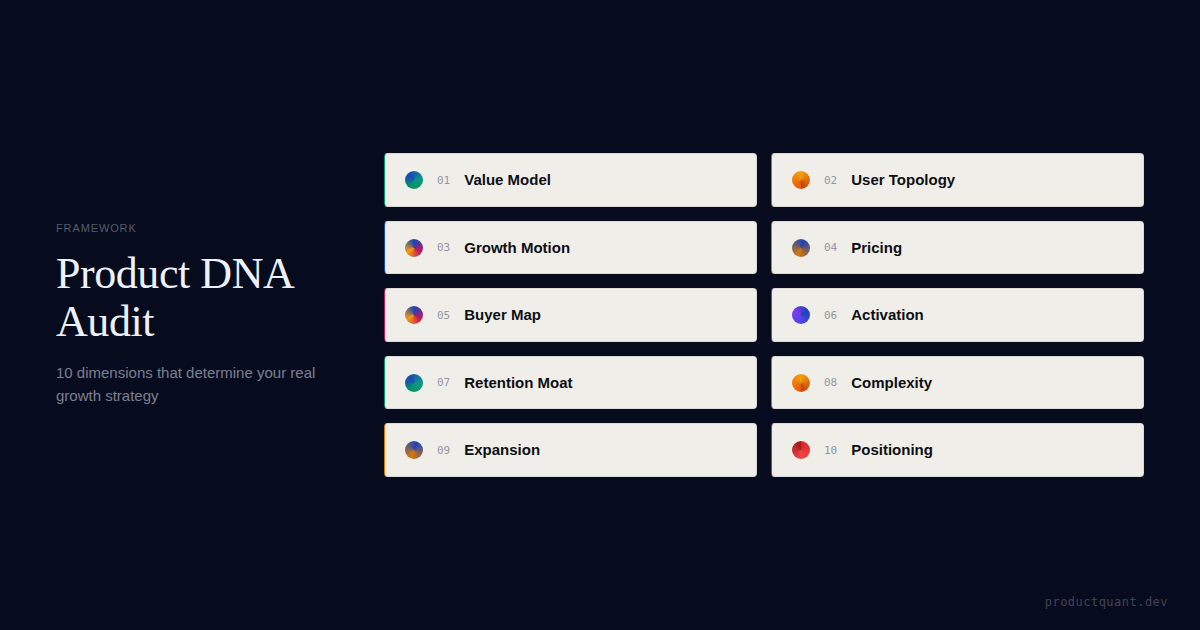
If the company keeps borrowing the wrong playbook, start at Dimension 1.
The Product DNA framework is designed to classify the product structurally before the team commits to the wrong motion again.
FAQ
Can one product have more than one value-delivery model?
Sometimes, especially in broader platforms. But one model usually dominates the core GTM logic. The mistake is treating every secondary capability like it should dictate the whole motion.
Why does system of record usually mean slower activation?
Because systems of record depend on real data, governance, configuration, and workflow change. Those things make the product more valuable and more durable, but they also make a lightweight trial less informative by default.
Can an intelligence layer still use PLG?
Yes, but the meaningful product-led window often starts only after integration and data flow. That means the company should measure activation from the point where the product can actually generate insight, not just from signup.
What is the most common misclassification?
Treating a system of record or intelligence layer like a simple workflow tool. That usually creates overly short trials, shallow onboarding, and underestimation of setup burden.
What is the difference between a value delivery model and a business model?
A business model describes how a company makes money — subscription, usage-based, licensing, marketplace. A value delivery model describes how the product creates value for users. Both matter, but they operate independently. A workflow tool can be sold as a subscription, usage-based, or freemium. The value delivery model is the structural layer beneath the commercial layer. Getting the value delivery model right informs which pricing models will feel natural and which will feel forced.
How does value delivery model affect PLG fit?
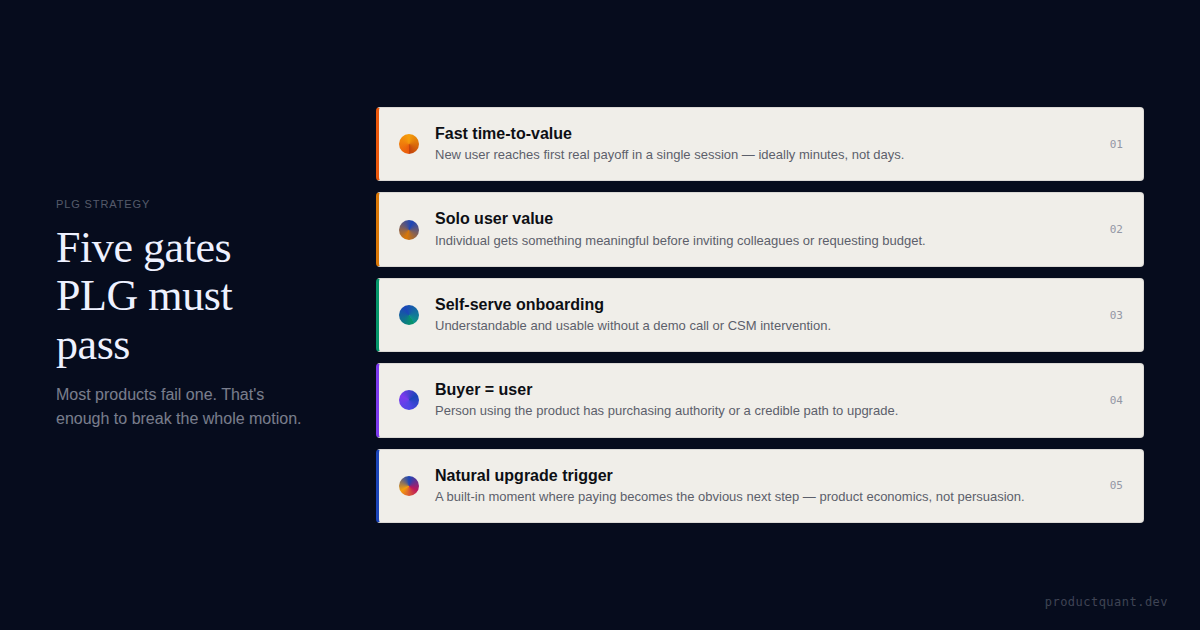
Workflow tools and simpler automation platforms tend to have the highest PLG fit — value is visible quickly without heavy configuration. Systems of record rarely suit pure PLG because meaningful evaluation requires real data and governance setup that a free trial cannot replicate. Intelligence layers can work with product-led acquisition but need the trial window calibrated to when data is flowing, not just when the account was created. Infrastructure products often use developer-led growth (DLG) rather than PLG — adoption happens through technical teams before commercial conversations begin.
Should the value delivery model influence content strategy?
Directly. Workflow tools benefit from task-oriented content: guides, templates, and tutorials that help the user do the specific job better. Systems of record need content that addresses migration concerns, governance, and long-term operational fit. Intelligence layers need insight-led proof — case studies, benchmark reports, and analyses that demonstrate what the product reveals. Infrastructure products need documentation-first content because the developer evaluating the tool will read the docs before anything else. When content strategy ignores the value delivery model, the team tends to produce generic thought leadership that does not move the buyer.
Sources

About the Author
Jake McMahon writes about Product DNA, growth systems, and the structural choices that determine whether activation, pricing, and GTM fit the product or quietly fight it. ProductQuant helps teams classify the product they actually have before they import somebody else's playbook.
Related Reading

Start with what the product is, not what the team wants it to be.
If the growth motion keeps feeling wrong, there is a good chance the value-delivery model was misclassified before the rest of the strategy got built.