

TL;DR
- PLG is a structural outcome, not a tactic you layer onto any SaaS product.
- The biggest PLG constraint is usually the buyer-user split: the person who gets value cannot actually buy.
- Products with slow time-to-value, team-dependent activation, or procurement-heavy conversion usually need sales assist or a sales-led motion.
- The right question is not whether PLG is trendy. It is whether your product can honestly support self-serve acquisition, activation, and upgrade.
Every quarter, another B2B SaaS team decides to "go PLG." They add a free tier. They rebuild onboarding. They shift budget from sales to growth. Six months later, signups are up, paid conversion is flat, and everyone argues about whether the onboarding is still the problem.
Usually it is not.
The deeper issue is structural. Product-led growth only works when the product can deliver real value quickly, to an individual user, without human help, and then create a natural reason to pay. If any of those pieces are missing, PLG turns into a very expensive way to collect unqualified signups.
"The fastest way to waste a year is to force self-serve conversion onto a product that still needs human translation."
— Jake McMahon, ProductQuant
That is why the same tactic can feel obvious for Calendly and disastrous for a compliance platform. The tactic is the visible layer. The product DNA underneath is what decides whether it can work.
The pattern is usually obvious in the operating metrics long before leadership names it honestly. Signup volume rises. Product teams celebrate top-of-funnel growth. Then paid conversion stalls, support load rises, and the team starts debating whether the problem is onboarding, pricing, or lifecycle email. In many cases the answer is none of those in isolation. The real issue is that the business is trying to run a self-serve motion on a product that still needs human translation.
That matters because the wrong diagnosis creates the wrong roadmap. Teams keep polishing the free tier and the nurture sequence when the product still needs buyer education, assisted setup, or team-wide rollout before it can become commercially real. That is not a funnel bug. It is a motion-design mistake.
What Are the Five Structural Prerequisites for PLG?
Before debating free tiers, product-qualified leads, or lifecycle emails, check the prerequisites. If these are not true, PLG will struggle no matter how polished the funnel looks.

1. Fast time-to-value
A new user needs to reach the first real payoff in a single session, ideally in minutes. If value arrives only after configuration, integrations, data backfill, or team rollout, the product is not naturally self-serve.
This does not mean every serious B2B product has to feel lightweight. It means the evaluation path has to be short enough to sustain intent. If value only appears after a week of setup, the motion is already drifting toward a guided pilot rather than classic PLG.
2. Individual user value
A lone user needs to get something meaningful before they invite colleagues or request budget. If the product is mostly empty until multiple people join, solo signups will churn before activation.
This is where many collaboration-heavy products get mislabeled. A free entry point is not the same thing as solo value creation. If the first meaningful outcome requires multiple participants, the activation unit is social, not individual.
3. Self-serve onboarding
Account creation is not onboarding. The product has to be understandable and usable without a demo call, implementation session, or CSM intervention.
A simple test helps here: if your best self-serve users still need a human to map the workflow, explain the right setup path, or clarify which feature matters first, the product may be discoverable self-serve but it is not yet operable self-serve.
4. Buyer-user alignment
The person using the product needs purchasing authority, or at least a credible path to upgrade without getting trapped in procurement. This is the break point for many B2B tools.
This is the hardest prerequisite for B2B teams to accept because the product can still be genuinely useful. The problem is that utility does not equal purchasing power. Security, developer, analytics, and operations tools often create enthusiasm before they create budget authority.
5. Natural upgrade triggers
The product needs a built-in moment where paying becomes the obvious next step: seat limits, usage thresholds, advanced workflows, or higher-stakes outcomes. If nothing in normal usage pushes the user toward paid, the motion depends on marketing pressure instead of product value.
If the free experience can continue indefinitely without a meaningful tradeoff, the business is relying on persuasion instead of product economics to drive upgrade. That is usually where teams start over-investing in prompts, discounts, and conversion copy.
Run the Product DNA diagnostic before you copy a PLG playbook.
The diagnostic helps founders and product leaders audit activation, buyer-user alignment, pricing fit, and GTM structure before they invest in the wrong motion.
Three Patterns That Change How PLG Needs to Work

The buyer-user gap
This is one of the most common constraints in B2B SaaS. A practitioner signs up, gets value, and hits the upgrade wall. The actual buyer sits in finance, IT, security, or a management chain that never touched the product.
The funnel can look healthy until conversion. Teams respond by tweaking prompts and pricing screens. The more useful interpretation is that the wrong person is reaching the paywall first, which means the PLG motion may need sales assist, stakeholder education, or a different upgrade path rather than a full strategic reset.
Team-dependent activation
Some products only become useful when multiple people participate. That can still be a great PLG business. It just means a lone free user cannot prove the value alone. If the first value event depends on inviting teammates, activation is social before it is purely individual, so the product needs invite-first design, collaboration prompts, and team-based activation logic.
Slow activation products with short trials
Infrastructure, analytics, security, and compliance products often need setup, integrations, or baseline data before they become valuable. A 14-day trial assumes the product can demonstrate itself quickly. Many B2B products simply cannot, which does not rule out PLG. It means the motion may need longer evaluation windows, seeded environments, guided setup, or a product-led entry point with human help layered in at the right moment.
These patterns do not automatically kill PLG. They change the kind of PLG design the product can support, and they usually tell you where self-serve needs help from trial structure, collaboration mechanics, or sales assist.
| Constraint | What PLG can still own | What usually needs help |
|---|---|---|
| Buyer-user gap | Acquisition and early product proof | Buyer confidence, procurement, sales assist |
| Team-dependent activation | Champion discovery and invite momentum | Team rollout design and shared activation |
| Slow activation | Product-led entry and early qualification | Guided setup, seeded environments, longer evaluation |
What a PLG Fit Problem Looks Like in the Numbers
Most teams do not identify PLG misfit from first principles. They notice it in the business metrics first. The product is attracting attention, but the commercial curve underneath it does not behave like a healthy self-serve motion.
- Signup volume looks strong while paid conversion stays stubbornly flat. Demand exists, but the path from value to revenue is broken.
- Usage is concentrated in a few power users instead of expanding across an account. That often signals a buyer-user split or a team-value problem.
- "Self-serve" users generate a surprising amount of support, sales, or solutions work. The company is manually supplying the context the product was supposed to provide on its own.
- Free users hit procurement, security, or implementation questions before they hit an obvious upgrade reason. That is usually a sign of enterprise buying complexity leaking into a motion that was designed for individual conversion.
These signals do not mean the product is weak. They mean the go-to-market wrapper may be wrong for the product. A product can be highly valuable and still be a poor fit for pure PLG. That is exactly when sales assist stops being a compromise and starts being the correct design choice.
What Should You Do Instead of Forcing PLG?
If your product misses one or more prerequisites, the answer is not to force PLG harder. Pick the motion that matches the product you actually have.
- Sales-led growth fits products with multi-stakeholder buying, long setup, and high-value deals. That is not a failure case. It is often the correct model.
- PLG with sales assist fits products that are discoverable and useful self-serve, but still need help converting larger accounts once usage proves intent.
- Sales-led with product signals fits products that will still close through people, but can use usage data to prioritize outreach, expansion, and account timing.
The point is to separate acquisition, activation, and conversion. Some products can self-serve the first two and still need humans for the third. That is a valid design. Pretending it is "pure PLG" usually just muddies ownership. For the adjacent questions, the activation article and pricing article extend this same structural argument.
Need a second opinion on your growth motion?
The Growth OS and Product DNA work help teams figure out whether they have an onboarding problem, a pricing problem, or a structural mismatch between product and go-to-market.
A Five-Question Audit
- Can a new user reach first value in a single session without help?
- Can one user get meaningful value before inviting teammates?
- Is the user who activates the product also able to buy it?
- Is there a natural upgrade trigger during normal usage?
- If you removed the free tier tomorrow, would your core sales motion actually change?
If too many of these answers are "no," you do not have a PLG execution problem. You have a PLG fit problem.
A practical way to use this audit is to score it at the leadership level before another quarter of funnel work begins. If only 1 or 2 answers are clearly yes, stop treating PLG as the default destination. If 3 are yes and 2 are mixed, you may have a hybrid opportunity but not a pure self-serve motion. If all 5 are strong yeses, then aggressive funnel optimization makes sense because the product structure is actually carrying the model.
FAQ
Does this mean PLG does not work for B2B?
No. It means B2B is too broad a category to be useful on its own. Some B2B products have instant value, clear self-serve usage, and simple upgrade mechanics. Others have complex implementation and committee buying. The motion should follow the structure.
What is the biggest warning sign that PLG will struggle?
The buyer-user split. If the person who gets value cannot approve the purchase, your self-serve funnel can generate enthusiasm without revenue and usually needs a better upgrade path or sales assist.
Can a sales-led product add PLG later?
Sometimes, but only after the product meaningfully improves time-to-value, onboarding simplicity, and upgrade design. A free tier alone does not change the underlying structure.
What if our ACV is too low for sales?
Low ACV makes expensive sales harder. It does not automatically make PLG viable. You still need a product that can acquire, activate, and convert self-serve.
Sources
- Harvard Business Review: How Software Companies Can Avoid the Trap of Product-Led Growth
- OpenView: 2023 Product Benchmarks Report
- Bessemer Venture Partners: 10 Product-Led Growth Principles
- BCG: The Growing Influence of Developers in Enterprise Tech Sales
Free tools: Score your PLG readiness in 2 minutes → PLG Readiness Score · Get the optimal trial length for your product → Free Trial Length Calculator

About the Author
Jake McMahon writes about product structure, growth systems, and why B2B SaaS teams stall when they borrow the wrong playbook. ProductQuant focuses on the messy layer between product mechanics and go-to-market execution: activation, pricing, buyer-user alignment, retention, and decision systems.
This article is part of the Product DNA series, which translates strategy problems into structural diagnostics teams can actually use.
Related Reading
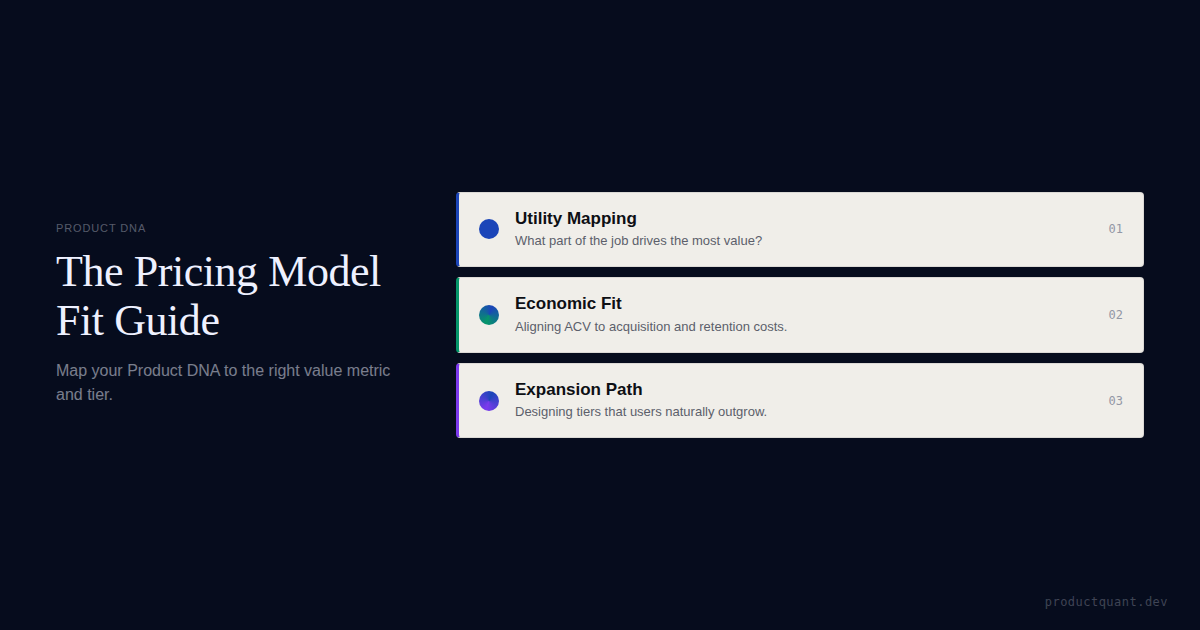
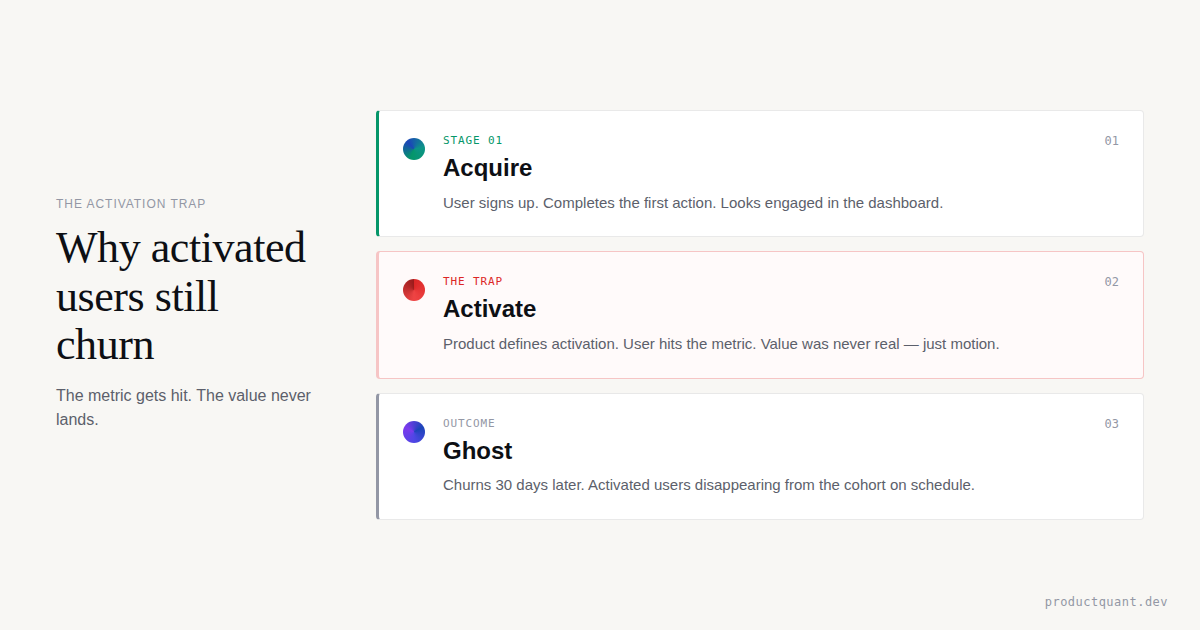
Figure out whether your issue is onboarding or product-GTM mismatch.
If your team keeps debating PLG, pricing, conversion, and sales assist without agreement, the diagnosis is probably missing. Start with the Product DNA view before you redesign the funnel again.