GROWTH SYSTEMS THINKING
Frameworks, analysis, and field notes from building growth operating systems for B2B SaaS.
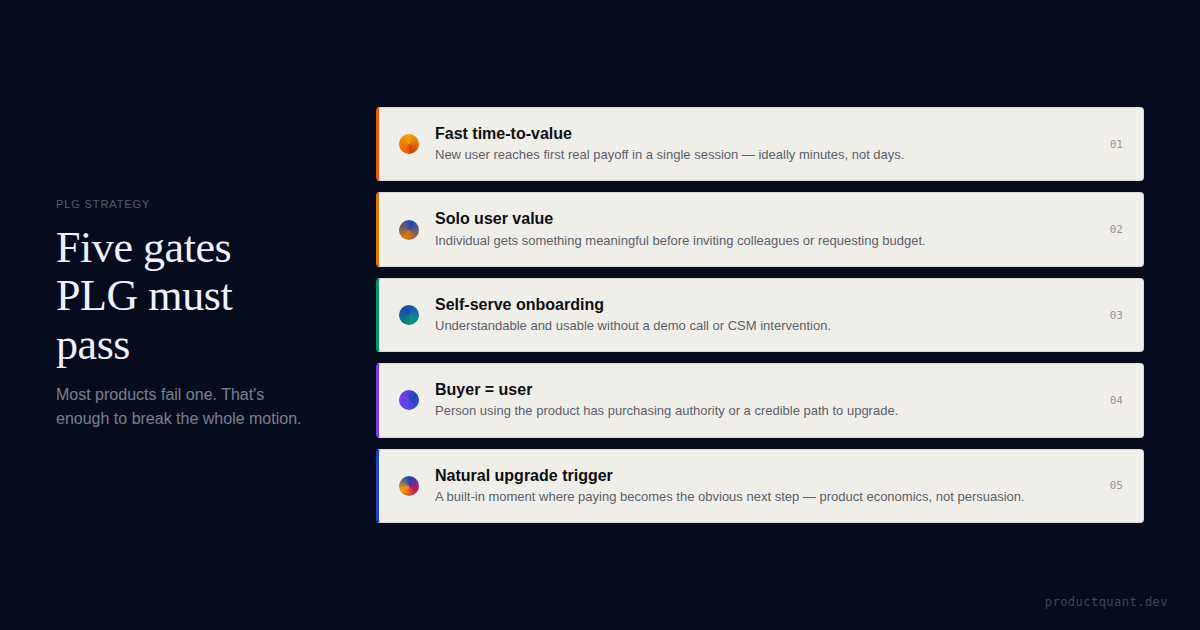
PLG is not a tactic you layer onto any SaaS product. It only works when buyer, user, activation, and upgrade mechanics line up structurally. Here's the audit for deciding whether your product can support PLG, needs sales assist, or should stay sales-led.
Read Article →Stop writing 'AI-powered' and start writing outcomes. Apply the Jobs to Be Done framework to rewrite feature descriptions that actually convert.

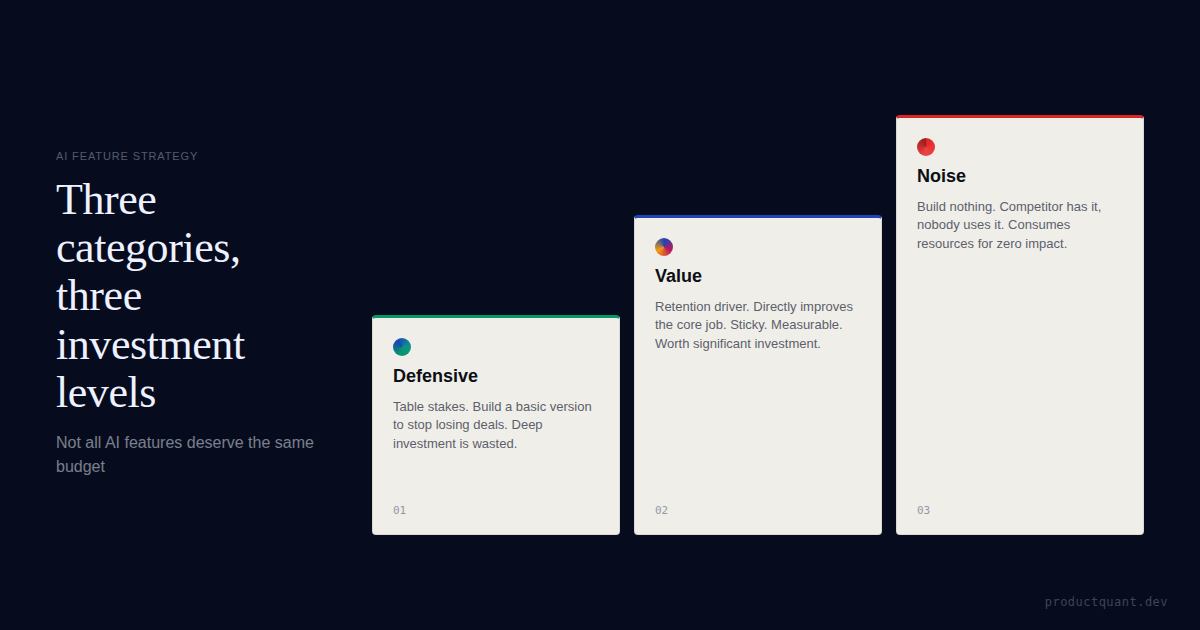
6% of users try a new AI feature. 1.2% use it weekly. This is the story of how it keeps happening — and a framework to stop building AI features nobody uses.
Most SaaS companies lack both a real onboarding flow and a churn prevention system. A practical anatomy of both bookends — and how to build your first iteration.
Feature factories ship constantly and grow slowly. Learn how Jobs-to-be-Done prioritization and four decision frameworks help SaaS teams build less and matter more.
Everyone wants AI and ML. Almost nobody wants data ownership. Why skipping governance creates broken dashboards and strategy decisions based on wrong data — and how to fix it.

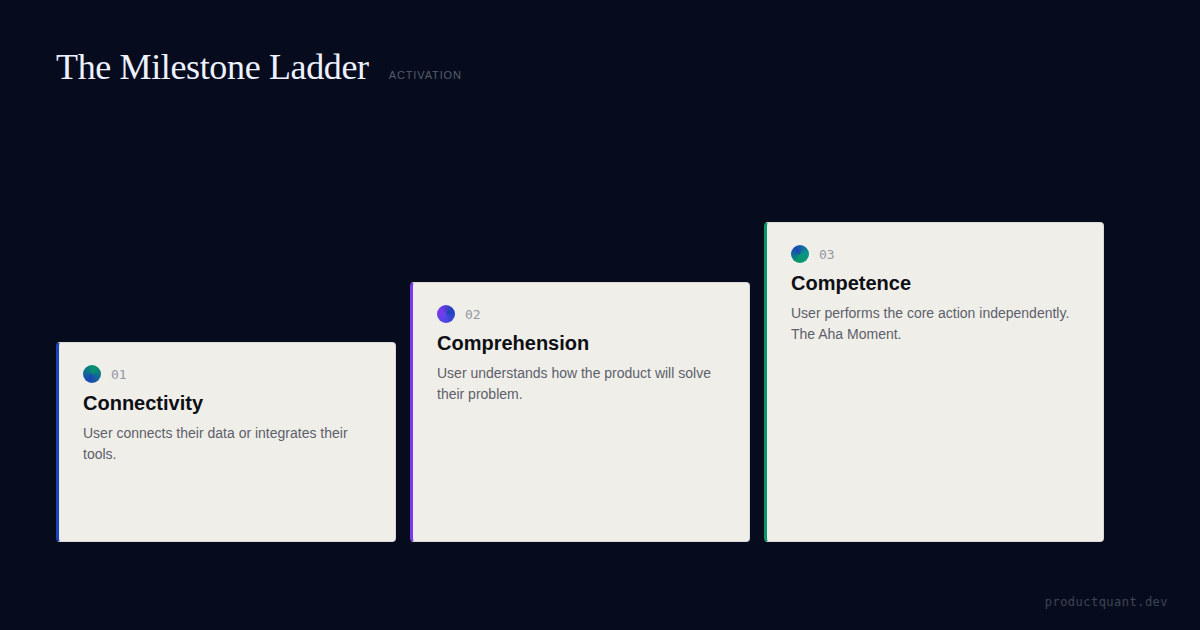
Activation rate is the percentage of new users who reach the moment your product delivers its core value. Most teams measure it wrong, benchmark it wrong, and try to improve it wrong.
Activation benchmarks vary sharply by product type, complexity, and growth motion. A 40% activation rate is a crisis in one product and a win in another. Here's how to compare correctly.

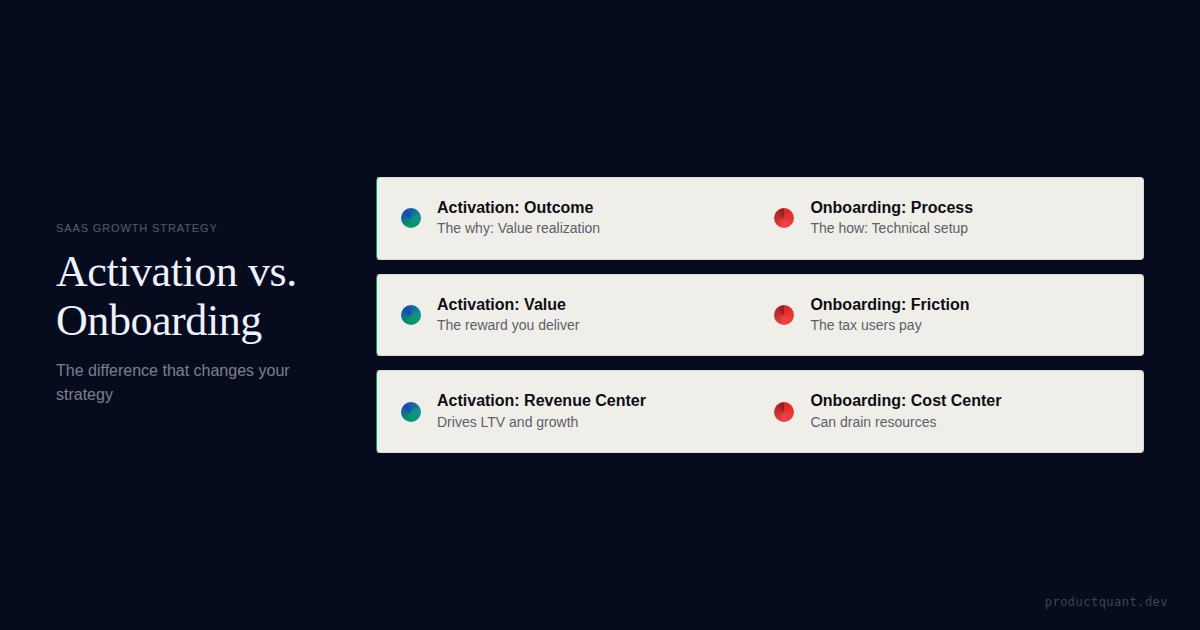
Onboarding is a process. Activation is an outcome. Conflating them means you optimise flows when you should be finding the behavioral signal that separates retained users from churned ones.

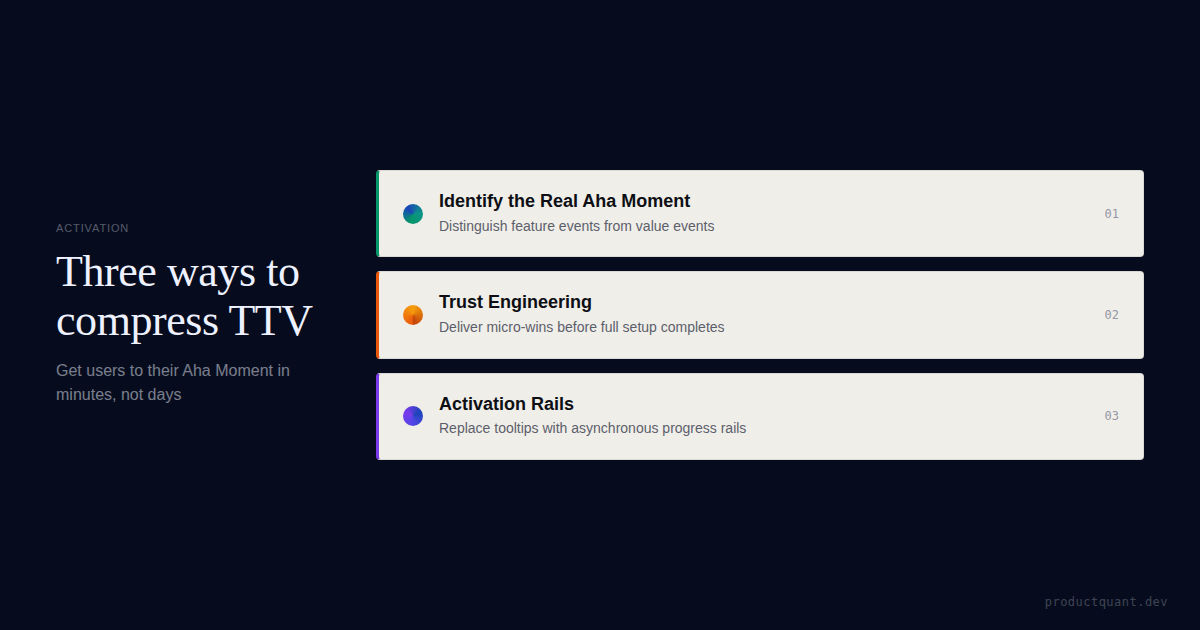
Time-to-first-value is a proxy for activation, not a substitute. The 5-minute rule forces product teams to be specific about what "value" means and when a user has actually experienced it.

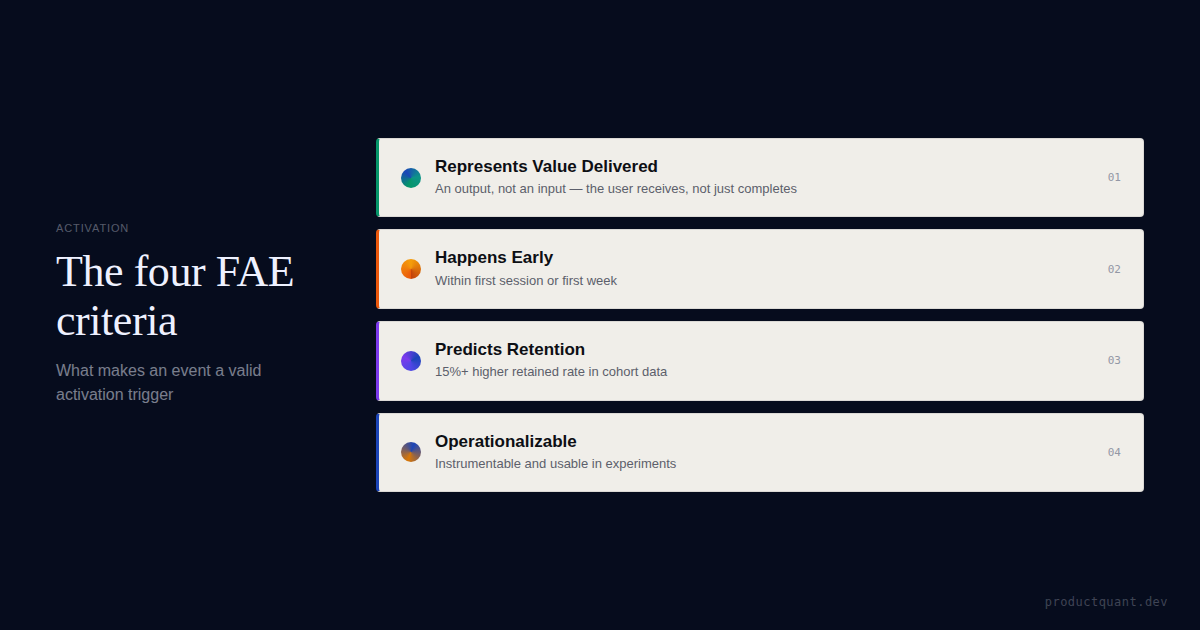
Onboarding completion is an input. Activation is an outcome. Learn what a First Activation Event is, how to find yours using behavioral data, and the experiments that move your SaaS activation rate.
The value-metric decision is the axis on which pricing scales. Pick a metric that scales with value, is easy to understand, and feels predictable before debating price points.

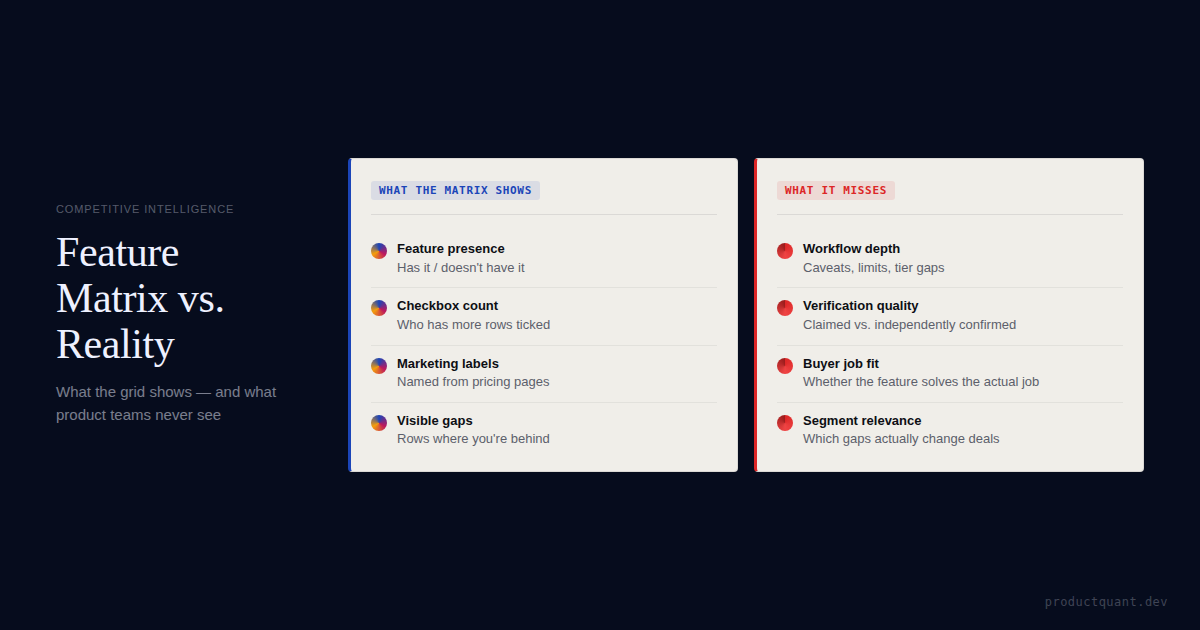
A better matrix compares depth, verification, and buyer relevance instead of turning visible feature parity into roadmap panic.

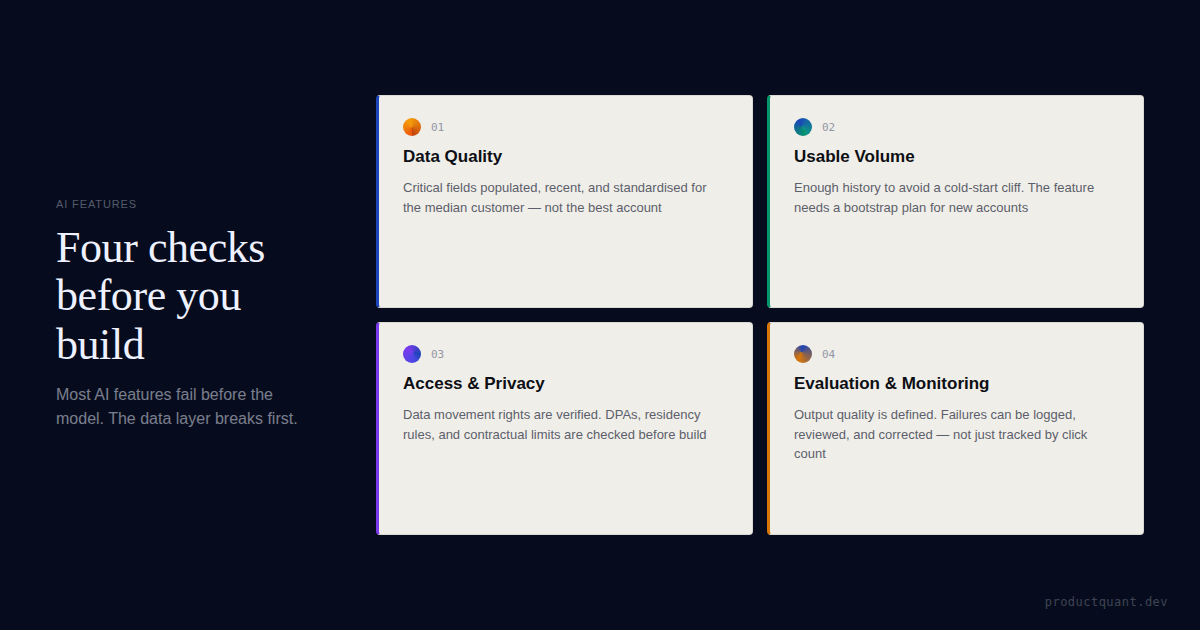
A practical readiness audit for SaaS AI features: check median-customer data quality, cold-start risk, access, privacy, and security before the model debate starts.
A practical AI feature filter for SaaS teams: score the problem, trust risk, verification path, workflow value, and feedback loop before you burn cycles on vendors or launch plans.

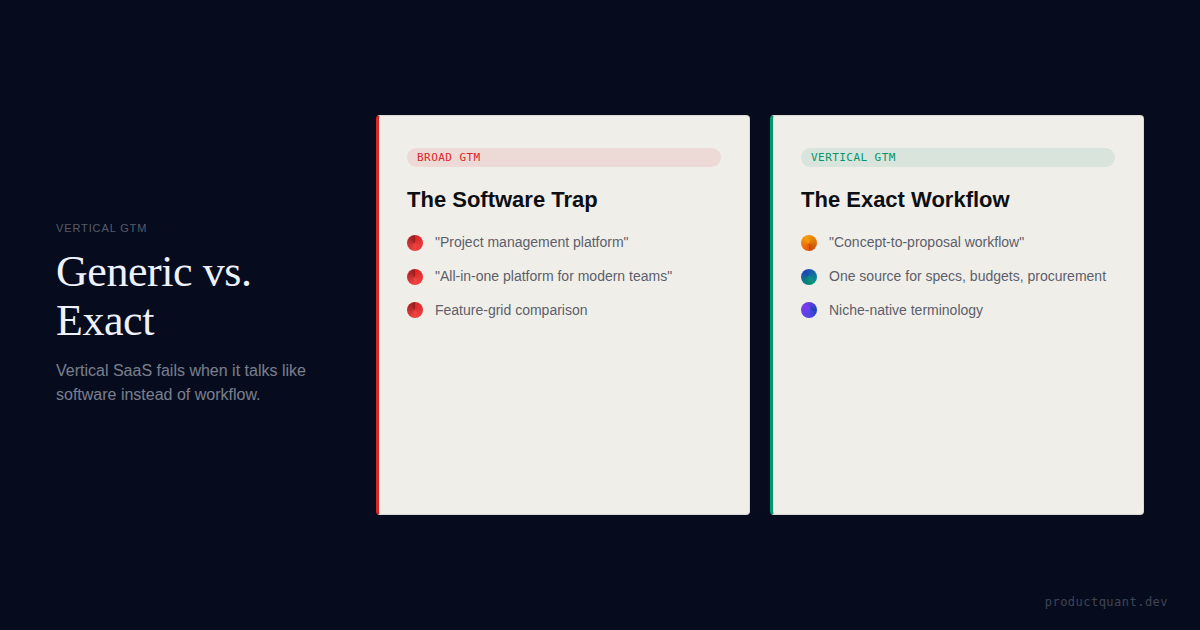
A practical GTM framework for niche SaaS: speak the buyer's workflow language, choose the real anti-competitor stack, narrow the beachhead, and resist adjacent segments too early.
Most B2B SaaS teams calculate TAM to impress investors. But a smaller TAM with a clear beachhead beats a huge TAM with no entry point. Here's how to size markets that actually guide GTM.
A practical cross-channel testing method for SaaS teams: use comparable spend windows, validate traffic quality after the click, and kill the channels that look busy but fail the threshold.

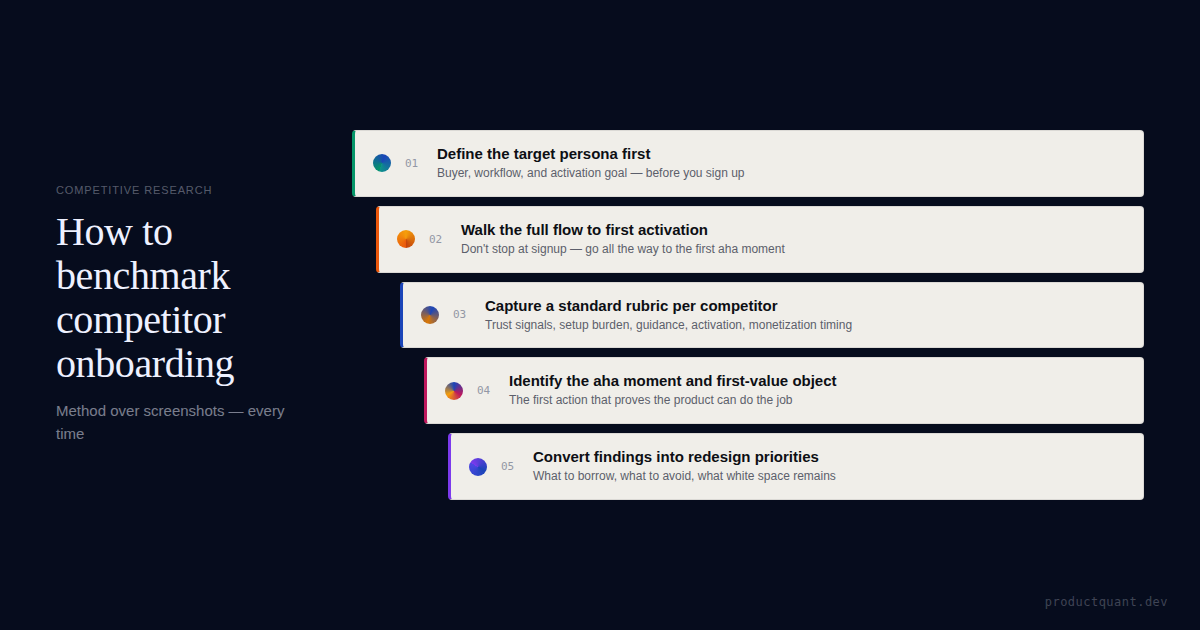
A practical competitive onboarding method for B2B SaaS teams: define the persona, benchmark trust signals and setup burden, identify first-value objects, and turn cross-product patterns into activation redesign priorities.
Most persona problems are validation problems. This audit method checks whether your current personas match sales-call distribution, cleaned customer data, and segment-definition reality before GTM effort drifts.

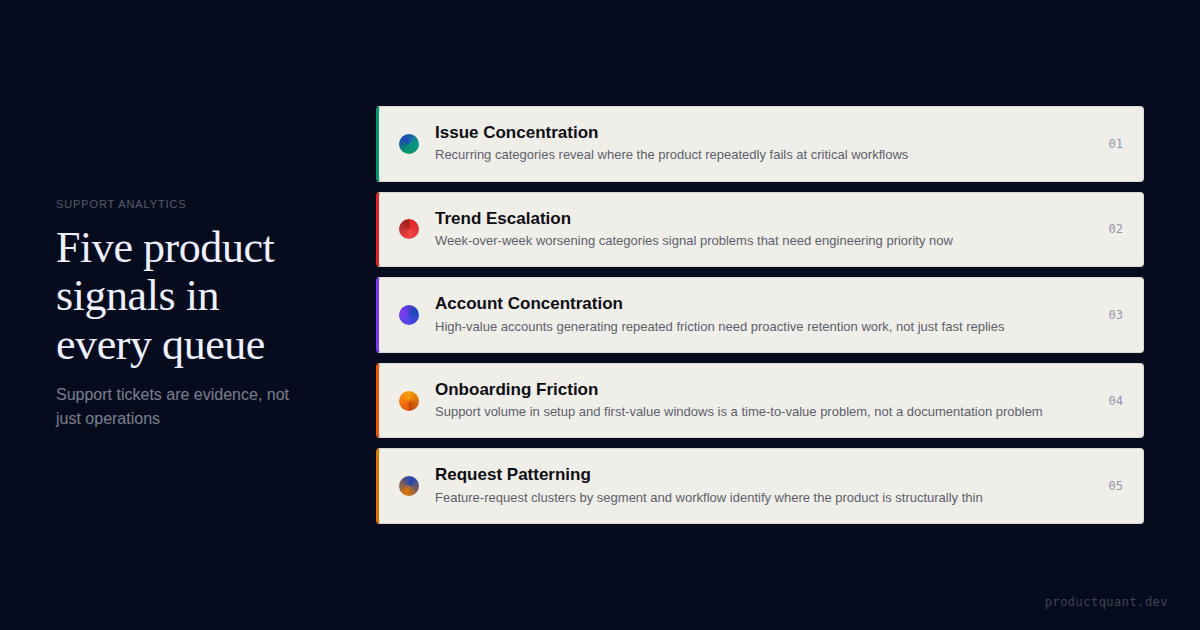
Your support queue is not just support ops data. A Zendesk analytics layer can surface recurring friction, onboarding bottlenecks, account risk, and roadmap pressure before the team defaults back to anecdote.
RFM only becomes useful in B2B SaaS when the customer is defined as the account, the data is cleaned hard, and each segment maps to a different retention or expansion motion.
Events showing up in PostHog is not the same thing as decision-ready instrumentation. This checklist covers payload QA, identify behavior, account grouping, server-side drift, duplicates, and source-of-truth reconciliation.
Dashboards show what happened. Statistical validation tells you whether the decision is safe enough to make. This guide covers where in-tool analytics stops and where a real testing layer begins.
Support tickets are not interviews, but they are one of the best high-volume signals for where users repeatedly fail to complete important jobs.
Competitor matrices tell you what rivals claim. Usage data shows which jobs, feature patterns, and workflows your best customers actually value enough to keep using.
Most analytics audits stop at tracking quality. This framework checks whether your system can validate segments, activation paths, expansion logic, and the business model itself.
Cancellation, downgrade, and account deletion are different behaviors. This guide covers how to design each flow around reason capture, respectful friction, and measurable branch logic.

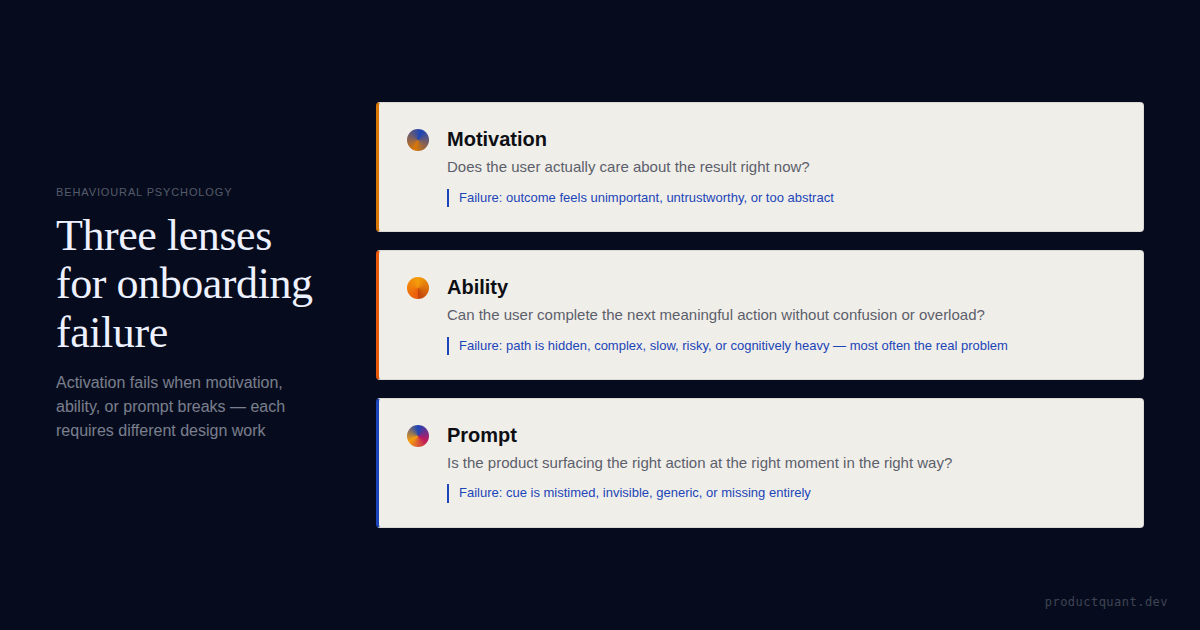
The BJ Fogg model gives a better way to diagnose onboarding: is the user unmotivated, unable to complete the next step, or simply not being prompted properly?
Stripe is not just a billing layer. It can reveal churn timing, failed-payment leakage, plan concentration, and subscriber-path quality that product analytics alone often misses.
Must-Haves go in every tier. Performance features define where tier lines fall. Delighters justify the premium. A Kano survey on your feature set produces the tier architecture in days — not months of internal debate.
Pre-migration audit, historical data options, SDK conversion, and HIPAA compliance layer — what to clean up before you migrate and what to build differently on the other side.
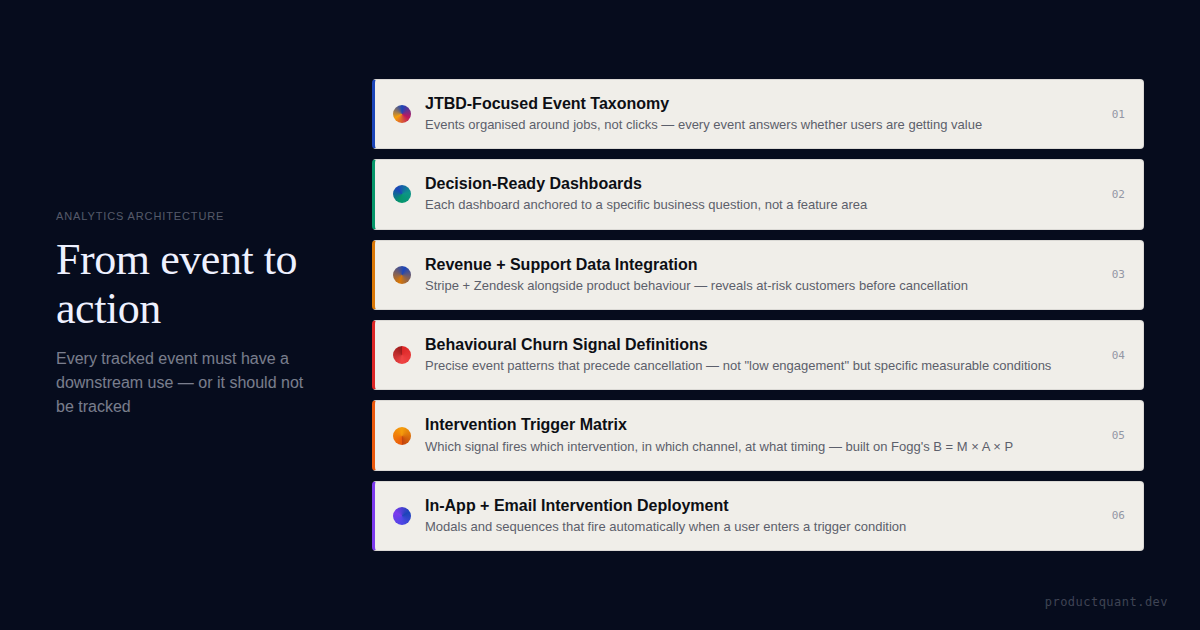
Most SaaS products track 8–15 events. They need 80–150. The gap is a design problem, not a data problem. A 5-step process for building a JTBD-focused taxonomy that answers the questions your team actually needs — before a line of tracking code is written.

How to build a product analytics system where every tracked event has a downstream use — from JTBD event taxonomy through Stripe revenue intelligence, behavioural churn signals, and automated in-app intervention.
Most B2B SaaS teams have metrics but no hierarchy. Without a hierarchy, dashboards show everything and guide nothing. The three-layer structure — North Star, leading indicators, diagnostic metrics — and the three dashboards that correspond to each.
Exit surveys capture what customers say after a decision is made. Product behaviour tells you what they were doing before. Why exit surveys systematically mislead retention strategy, and which behavioural signals to use instead.

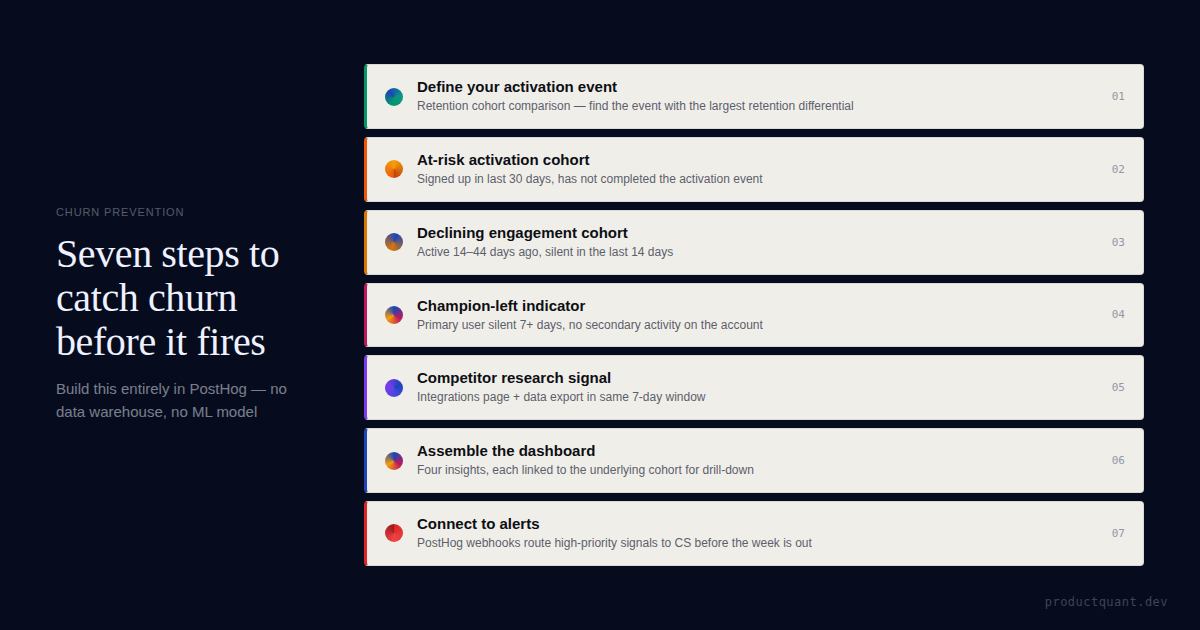
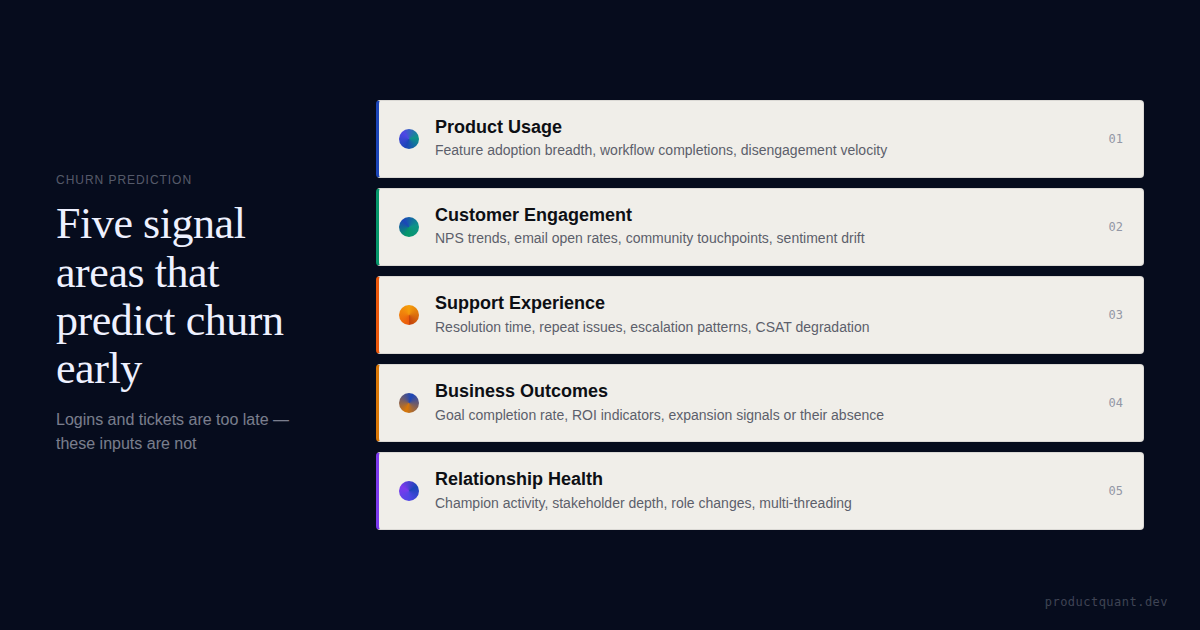
A churn dashboard that tracks cancellations tells you what already happened. An early warning dashboard tracks the signals that precede the decision — weeks upstream. Five signals, seven steps, no data warehouse required.
Customer interviews capture what buyers are willing to share when prompted. Sales calls capture what they say when they think they're just trying to buy something. Why recorded calls are a superior PMF data source, and how to analyse them systematically.
"We have PMF" is a claim. A PMF Evidence Brief is the documentation that supports it. The five components investors actually look for, and how to build each one from product usage data, customer data, and sales call analysis.
Revenue growth and high churn can exist simultaneously. $1M ARR is where mixed signals are most common — growth makes problems easy to ignore. How to read ambiguous PMF data correctly and determine which direction you're moving.

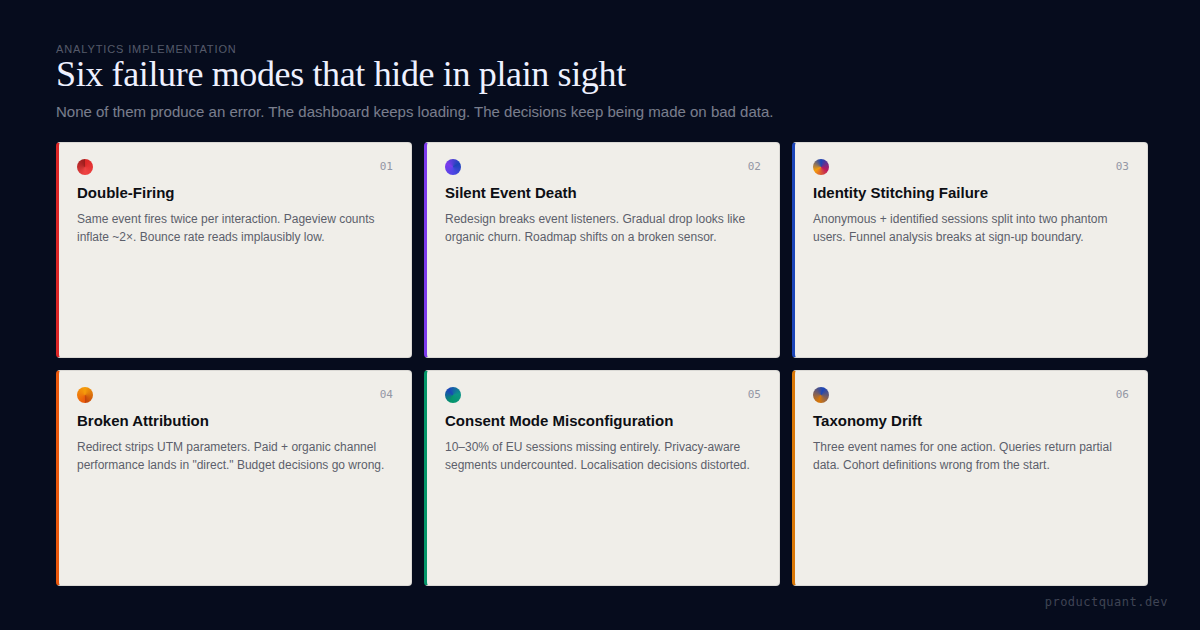
Dashboards show you what's being tracked — not what's missing, double-counting, or silently broken. The 6 failure modes that hide in plain sight, and how to find yours.

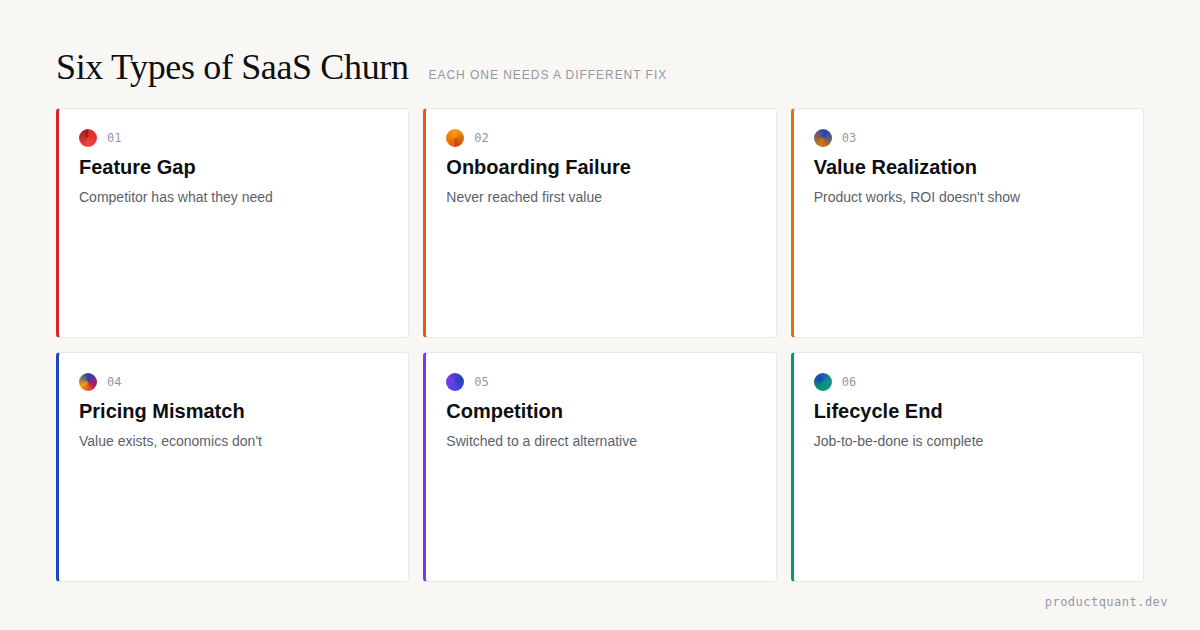
Value-not-realised, wrong ICP, competitor-switch, budget-cut, champion-left, feature-gap. Each has a different signal in your product data and a different intervention. Most teams treat them the same.
JTBD frameworks built from memory aren't frameworks — they're guesses. What real PMF evidence looks like, and how to tell the difference between a signal and a story you're telling yourself.
Most analytics consultants talk in frameworks. These 8 questions reveal whether they can actually deliver — and what good answers look like vs. red flags.
81% of analytics implementations contain errors. Here's what a real audit covers, what deliverables you should receive, and 8 questions to ask before hiring anyone.
When to implement PostHog yourself, when to hire help, and how to evaluate the real cost of each path — including the hidden costs that don't show up in the quote.
Migrating from Mixpanel to PostHog takes 4–8 weeks end-to-end. Three migration paths, five things that break, and a HIPAA-specific section for healthcare teams.
PostHog implementation costs range from $0 to $25,000+ depending on scope. Here's what you're actually paying for at each tier — platform costs, implementation services, and hidden costs.
Running the wrong growth playbook costs 6+ months of momentum. Seven specific signals that your product's strategy is misaligned with its actual type.
Autocapture, GeoIP enrichment, URL patterns, session recording, backend events, person properties — all can carry PII or PHI in a standard PostHog setup. A checklist for auditing each one.
HIPAA doesn't prohibit product analytics — it prohibits tracking PHI. A de-identified event taxonomy gives you full behavioural intelligence, a 90–95% reduction in platform costs, and zero compliance risk.

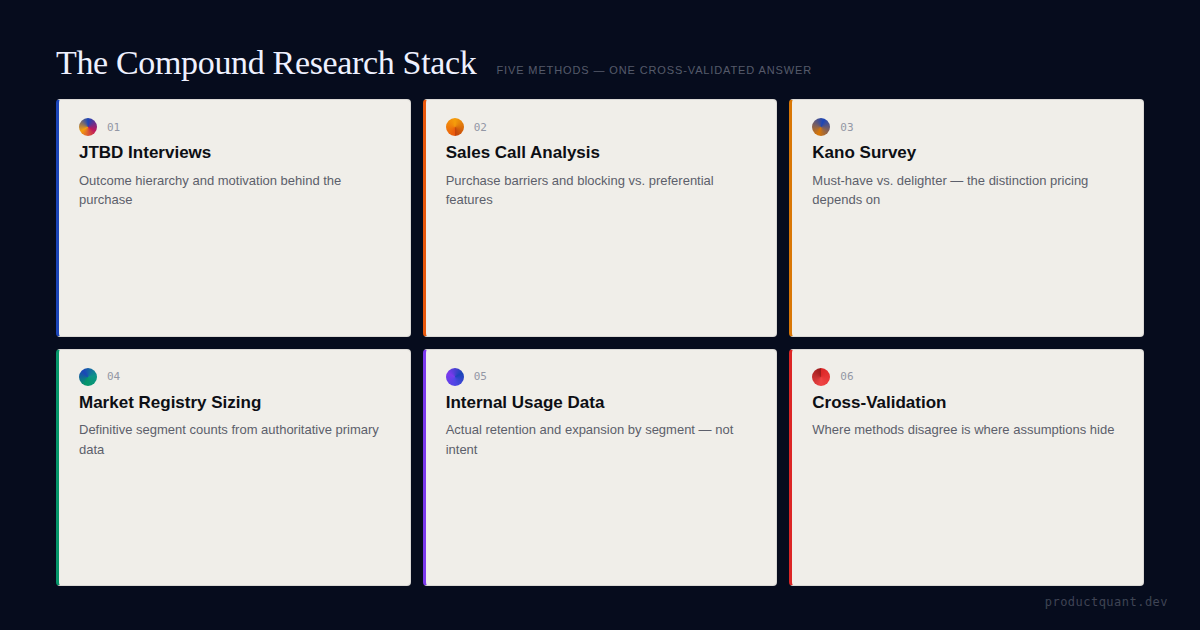
What happens when you run JTBD interviews, sales call analysis, Kano surveys, and market sizing simultaneously — and use the cross-validation to fix the assumptions your roadmap was built on.
The 4-step method for using public administrative registries to count your addressable market precisely, rank segments by revenue potential, and validate niches with a double-confirmation signal.
A practical post-seed product playbook covering activation, instrumentation, positioning clarity, retention, and the operating cadence needed before Series A.
A practical comparison of product analytics and marketing analytics for B2B SaaS, including what each measures, where they overlap, and why teams confuse them.
A 5-step framework for evaluating GTM consultants — covering bottleneck identification, stage-matched pricing tiers, framework vetting questions, pricing transparency signals, and 7 red flags that predict a failed engagement.

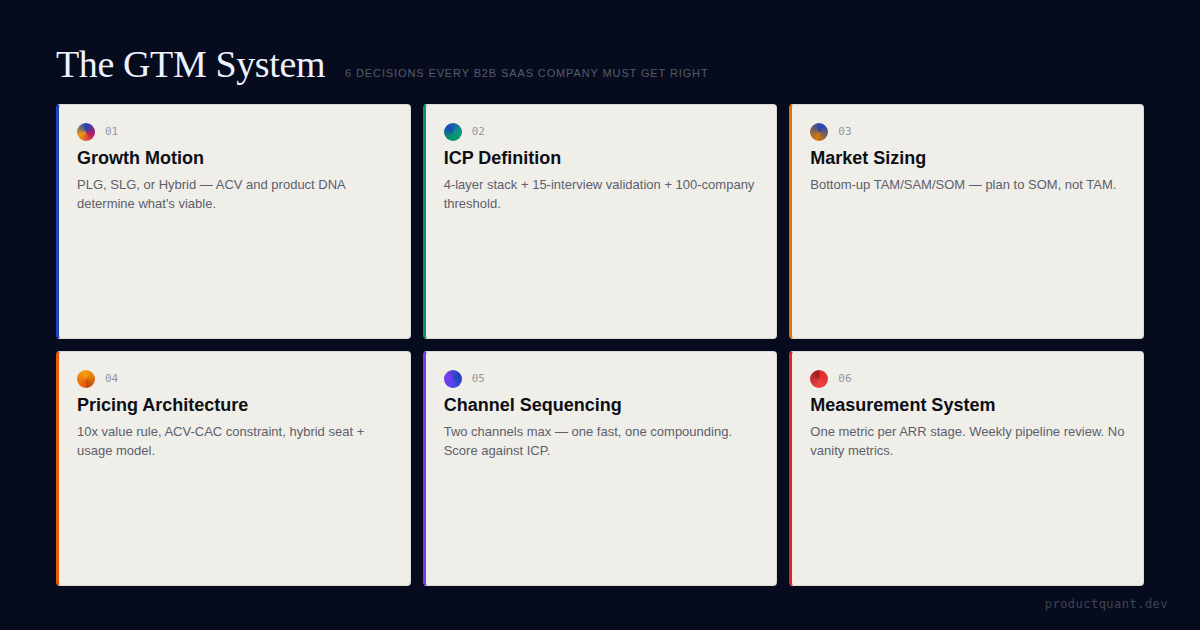
A 7-step go-to-market framework for B2B SaaS: ICP sequencing, motion selection, pricing alignment, channel strategy, hiring sequence, metrics by ARR stage, and how to execute a GTM reset without burning pipeline.
A practical guide to choosing a B2B SaaS growth consultant based on diagnosis quality, operating fit, specialization, and the kind of help your team actually needs.
An 8-point onboarding teardown framework for B2B SaaS covering promise clarity, path to value, friction, guidance, proof, dependencies, instrumentation, and handoff design.
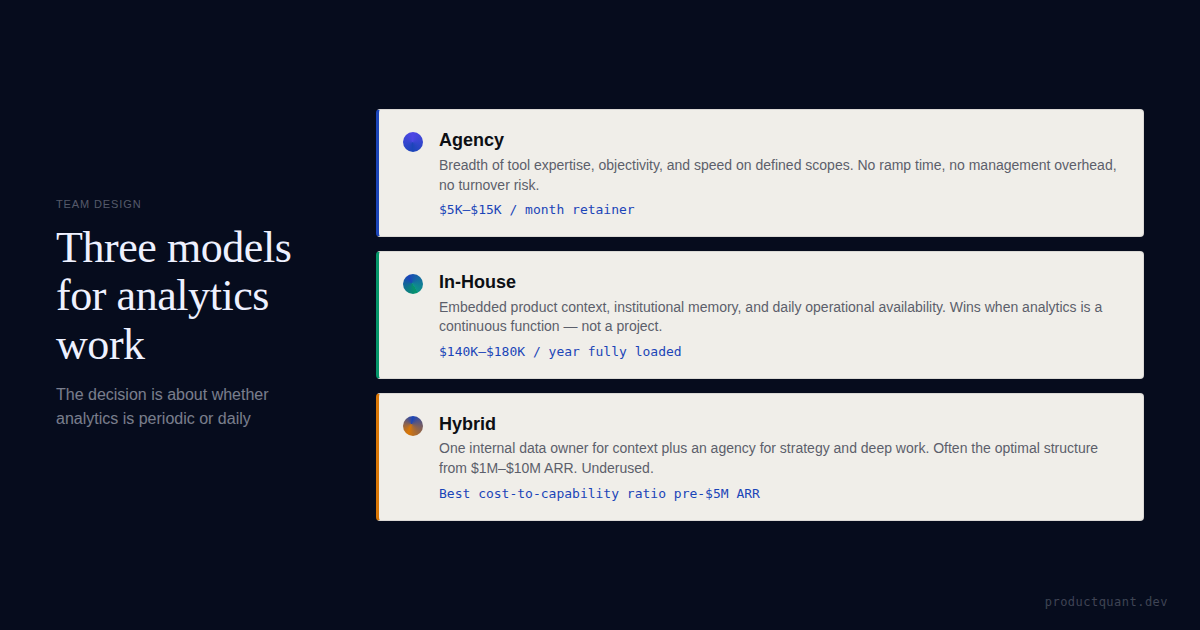
A practical guide to choosing between agency, in-house, or hybrid growth based on ownership, speed, incentives, system maturity, and cost structure.
A Series A product checklist for B2B SaaS focused on activation, retention, instrumentation, product-GTM fit, roadmap clarity, and operating cadence.
A practical scorecard for assessing product-led readiness across self-serve capability, activation, pricing fit, buyer-user alignment, instrumentation, and sales boundaries.
A practical persona canvas for B2B SaaS that models decision owners, buying pressure, proof needs, and adoption blockers instead of demographic filler.
A practical guide to choosing between fractional and full-time product leadership based on role clarity, founder dependency, system needs, and stage.
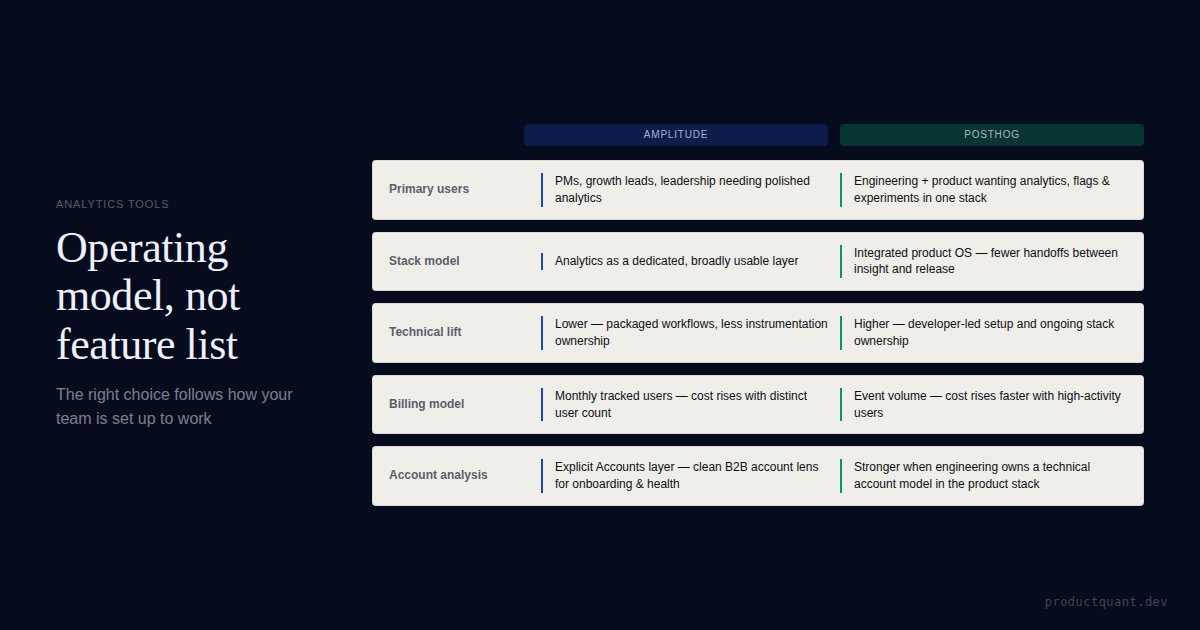
A practical comparison for B2B SaaS teams deciding between a more packaged analytics layer and a more integrated product OS with flags and experimentation.
A practical framework for deciding when to make the first product hire, what level to hire, and how to avoid adding a PM before the product system is ready.
A practical guide to what a real PLG consulting engagement should include, how to evaluate one, and when the team needs diagnosis before a roadmap.
What a growth operating system actually includes in B2B SaaS, and how analytics, experiments, churn, GTM, and ownership rules connect into one system.
A practical guide to testing pricing in B2B SaaS without creating buyer confusion, trust damage, or noisy results that teach the team the wrong lesson.
A practical implementation checklist covering tracking plans, QA, dashboard readiness, and governance so product analytics stays decision-ready after launch.
A practical sequencing guide for the first B2B SaaS experiments that matter, with a prioritization logic, tracker, and pre-registered hypothesis template.
A practical guide to what a product-focused growth audit should examine, what deliverables it should produce, and how to tell whether it is diagnosing the real bottleneck.
A practical PostHog setup guide covering event taxonomy, group analytics, first dashboards, and the setup pack ProductQuant uses for B2B SaaS implementations.
Three concrete examples of how product analytics creates return through cost reduction, activation lift, earlier churn intervention, and revenue visibility.
A practical guide to the workshop ProductQuant uses to combine JTBD interviews, ODI scoring, and Kano classification into sharper feature priorities.
The 5 PostHog dashboard templates ProductQuant prioritizes first for activation, retention, feature adoption, revenue signals, and experimentation.
A canonical explanation of what Product DNA analysis is, what it includes, and how it changes pricing, activation, GTM, and strategy decisions.
A North Star can align the team, but it cannot operate the system alone. This article covers the input metrics, guardrails, and decision rules that belong beneath it.

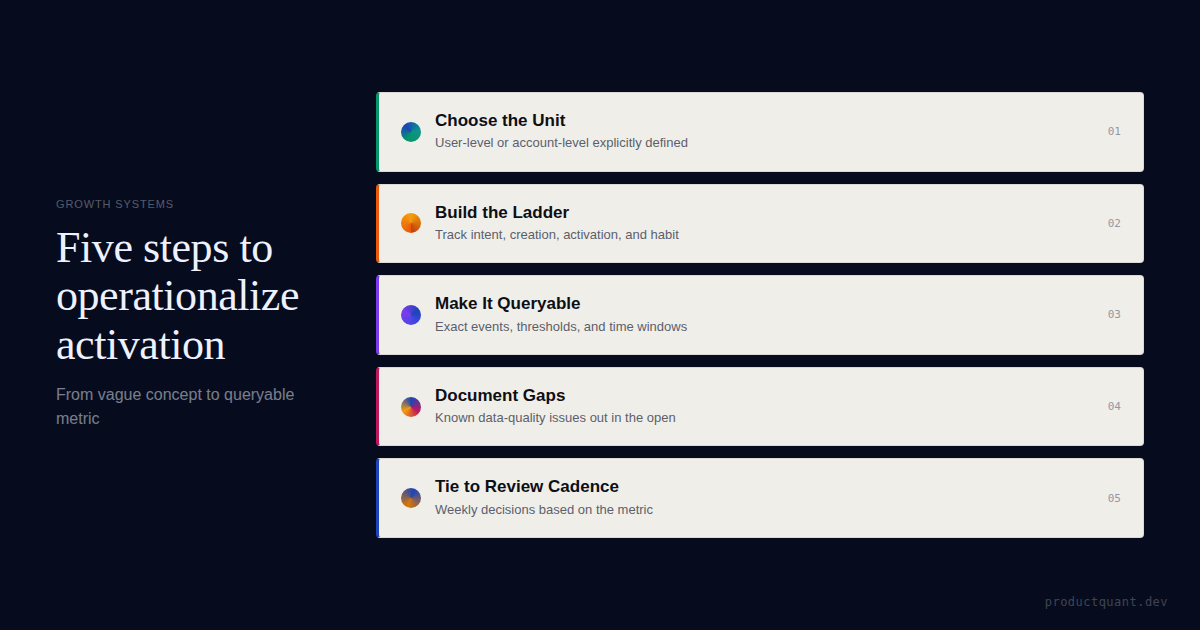
A better activation definition is not enough if nobody can query it, benchmark it, or use it in weekly decisions. This article covers the operating layer teams skip.
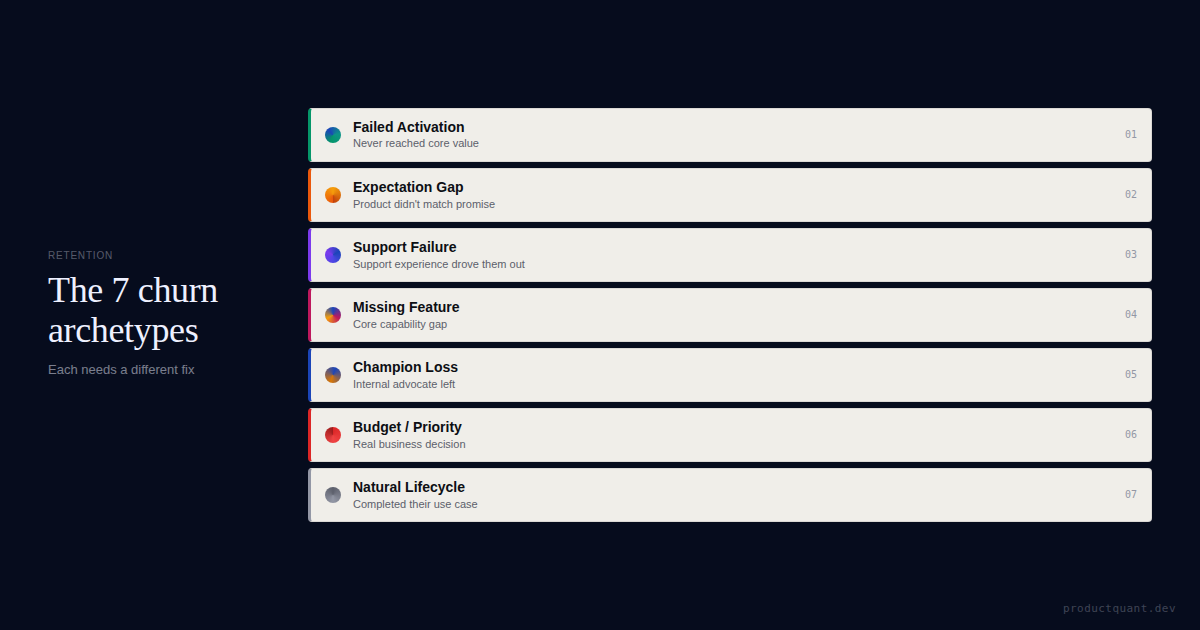
Most churn is not one problem. This article breaks retention loss into seven failure modes so teams can diagnose the right fix instead of running one generic save playbook.
Dashboards and weekly meetings do not create compounding growth by themselves. This article shows the decision cadence most teams are missing.
Many PLG audits stop at onboarding and upgrade flow. This article shows why buyer fit, pricing, and sales-assist design belong in the audit too.
Scaling upmarket changes buyer maps, activation, pricing, and motion. This article shows how to reclassify Product DNA as account complexity rises.
Hybrid growth fails when PLG and sales-assist lack clear boundaries. This article maps the handoff rules that keep both motions from cannibalizing each other.
Portfolio patterns are not product truth. This article shows where investor advice often conflicts with buyer, pricing, moat, and growth reality.

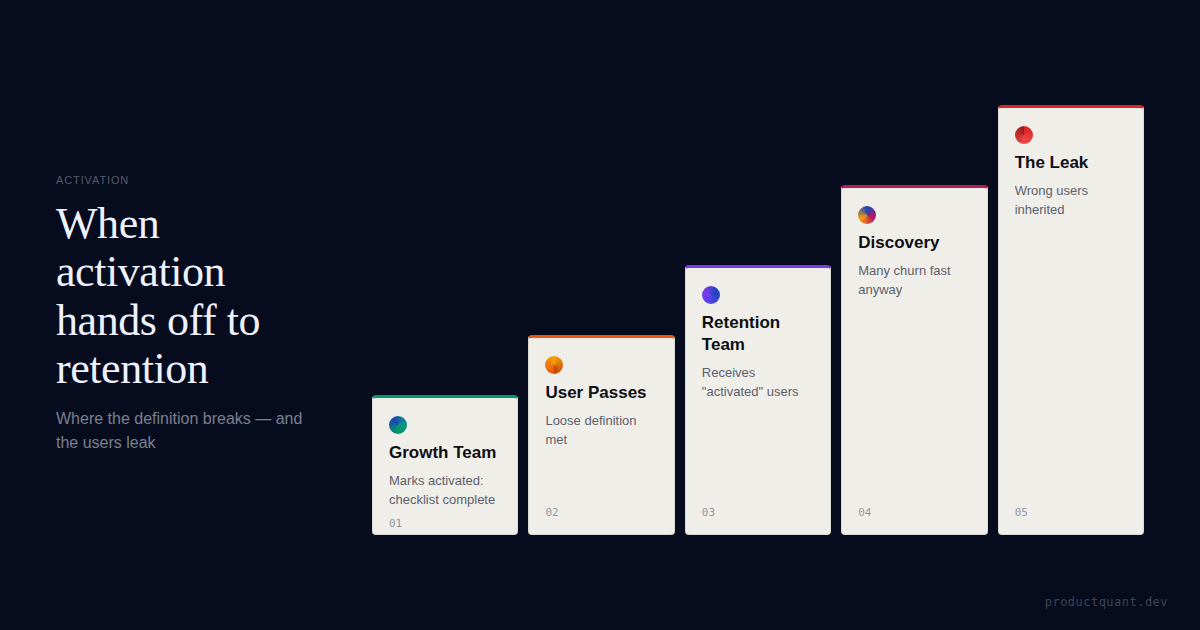
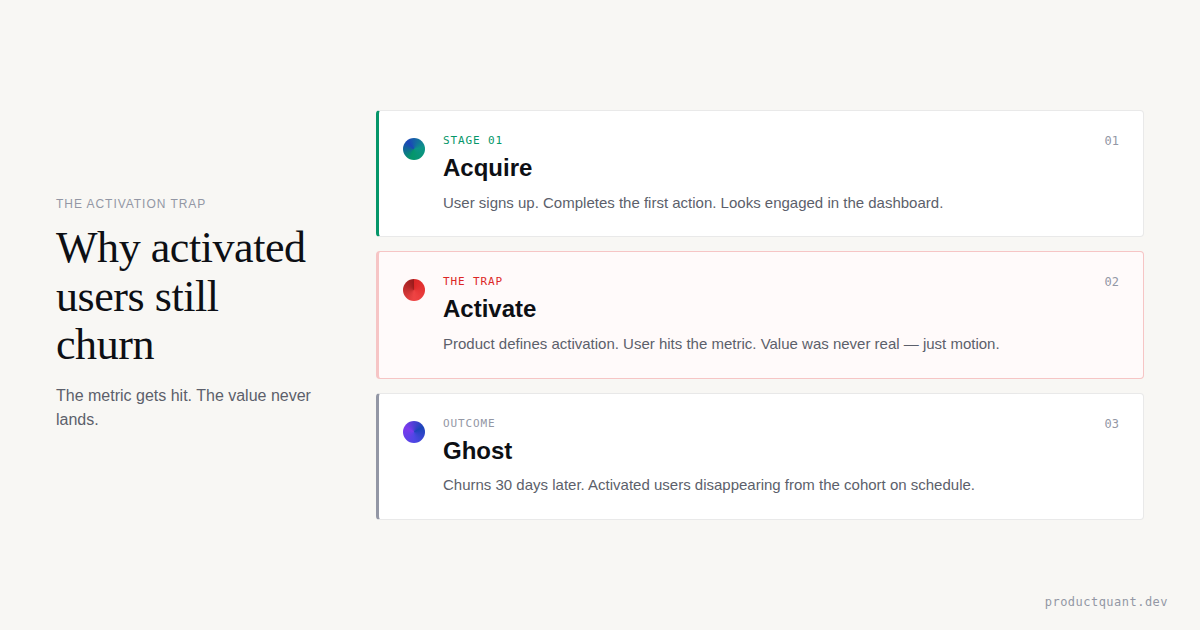
If activated users still churn quickly, the activation definition is probably weak. This article shows how to rebuild it from retention predictors.
Roadmaps need more than customer input. This article shows how to connect jobs, adoption, and retention into a learning loop.

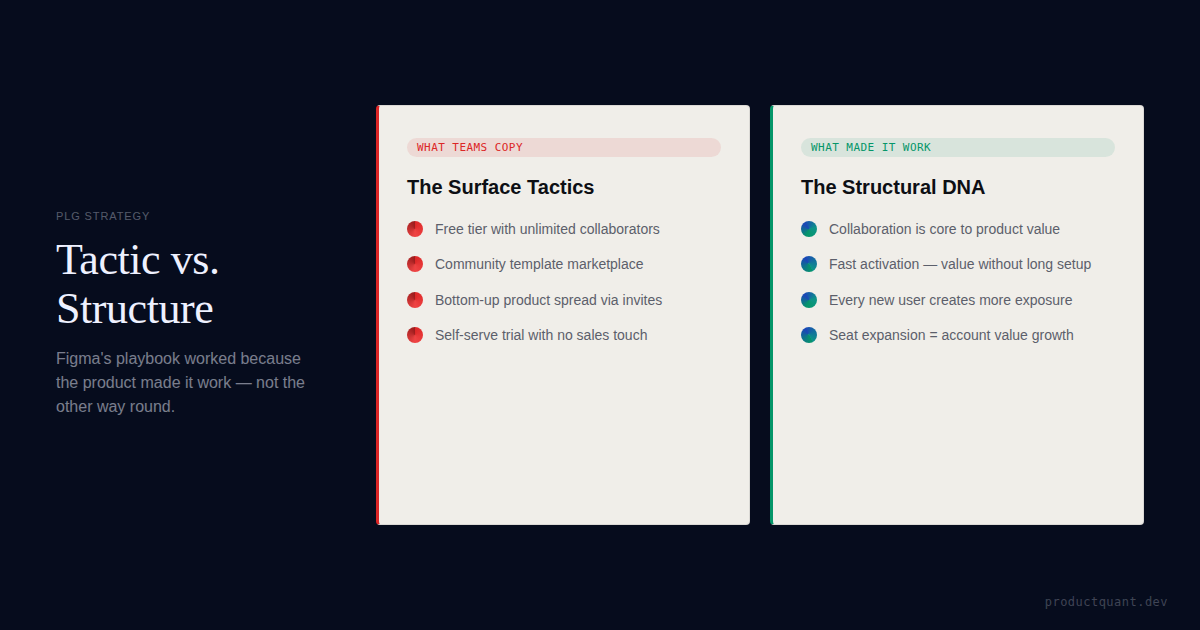
Figma's growth was a Product DNA outcome, not a generic PLG recipe. This article shows which structural conditions made the playbook work.
Per-seat, usage-based, and flat-rate models create very different expansion behavior. This article shows which growth motions they fit best.

Most churn models are built from shallow inputs. This article maps the event coverage needed for a more useful risk system.
Packaging backlash usually starts before launch. This article shows how topology, activation, moat strength, and buyer reality should shape pricing changes.
Strong products often sound generic because the team studies losses more than wins. This article shows how to rebuild positioning from actual buyer pull factors.
A product, company, platform, and portfolio each need different altitude. This article shows how to choose the right positioning target before the work starts.
Hybrid is often right for B2B SaaS, but it only works when self-serve and sales are sequenced by buyer, activation, and account complexity.

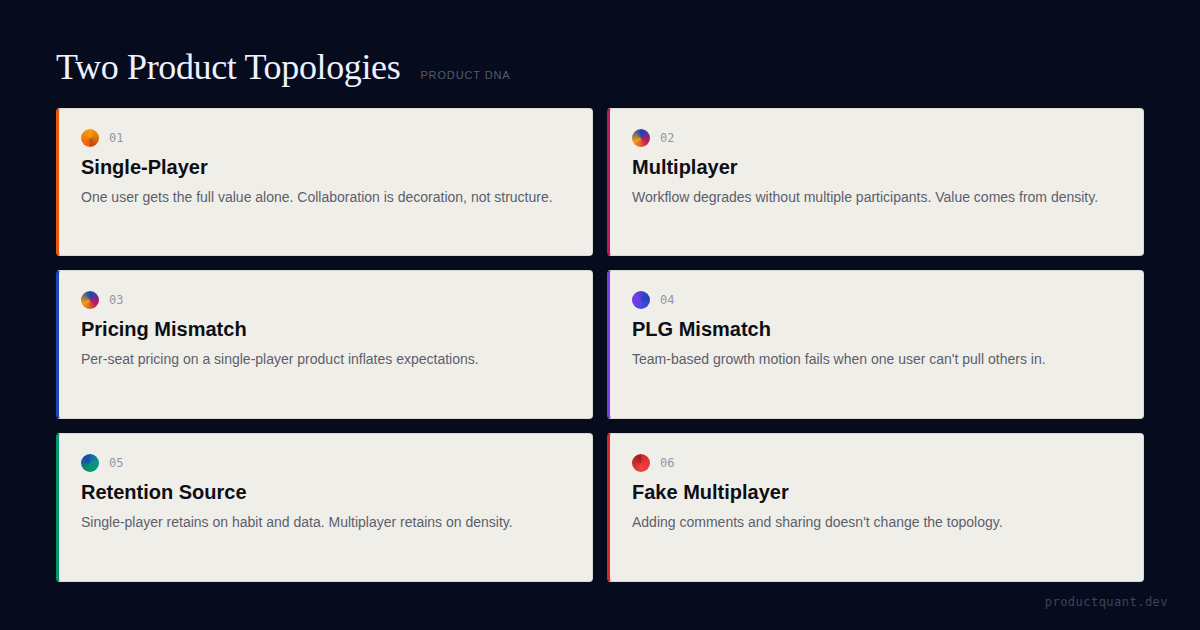
Collaboration features do not automatically change topology. This article shows when a product really becomes multiplayer and what else must change with it.
The motion that got a company to $5M often breaks at $20M. This article shows how buyer, activation, and complexity shift as SaaS moves upmarket.
A 14-day trial is not a default. This article maps trial length, support model, and evaluation design to the way value actually appears.

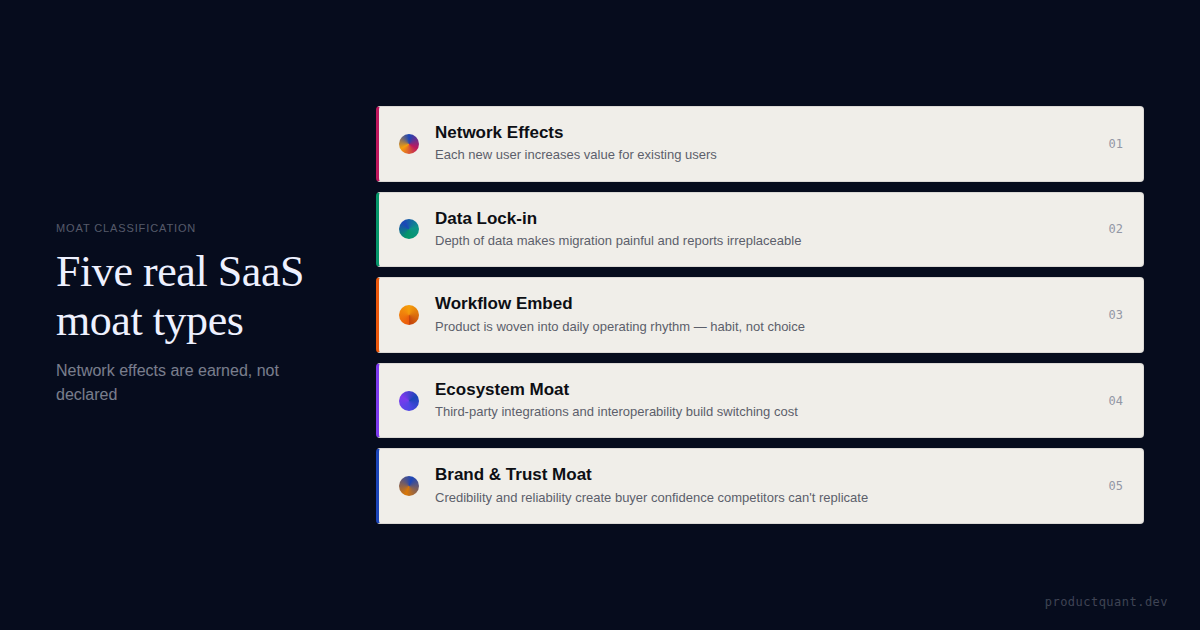
Many SaaS teams claim network effects when they really have a different moat. This article shows how to classify the mechanism honestly.
The product can be genuinely different and still sound generic. This article shows how to translate capability into buyer-relevant value.

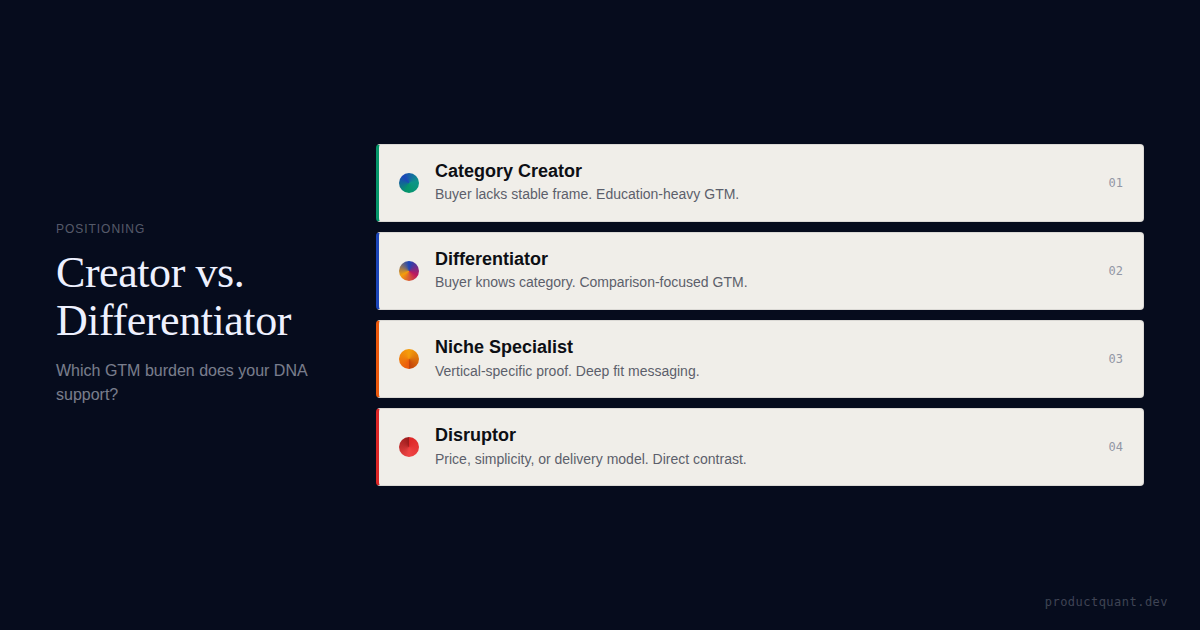
Most SaaS companies are not category creators. This article shows how the wrong classification quietly distorts content, GTM, and sales efficiency.

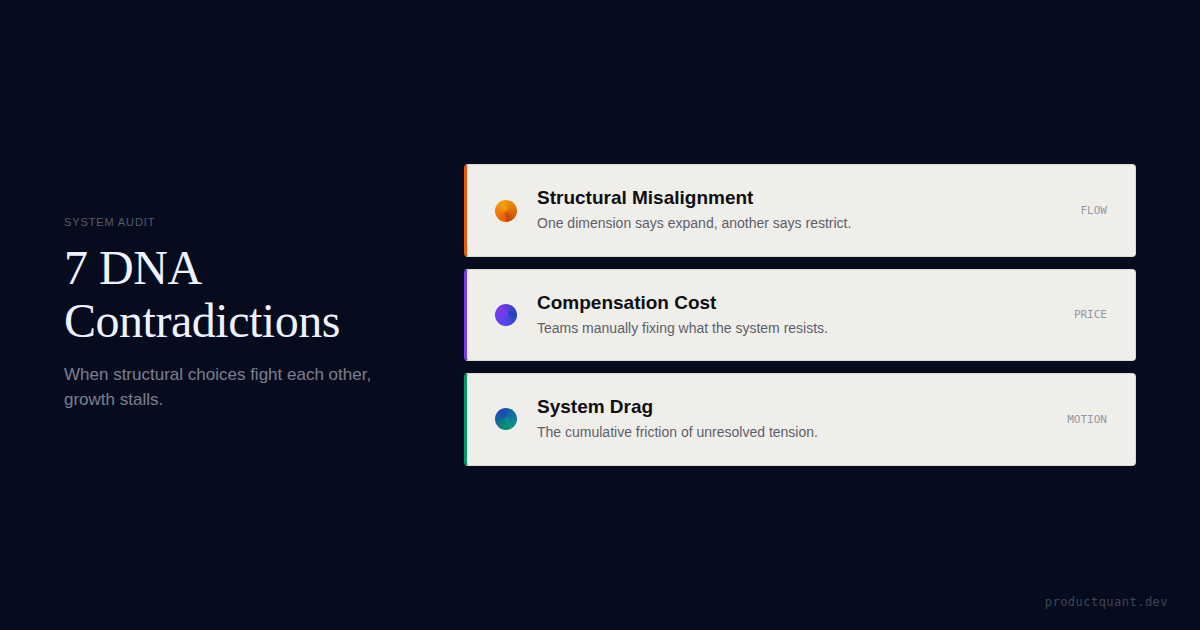
Some growth problems are really structural contradictions between pricing, activation, buyer maps, and value delivery. This article shows the patterns.

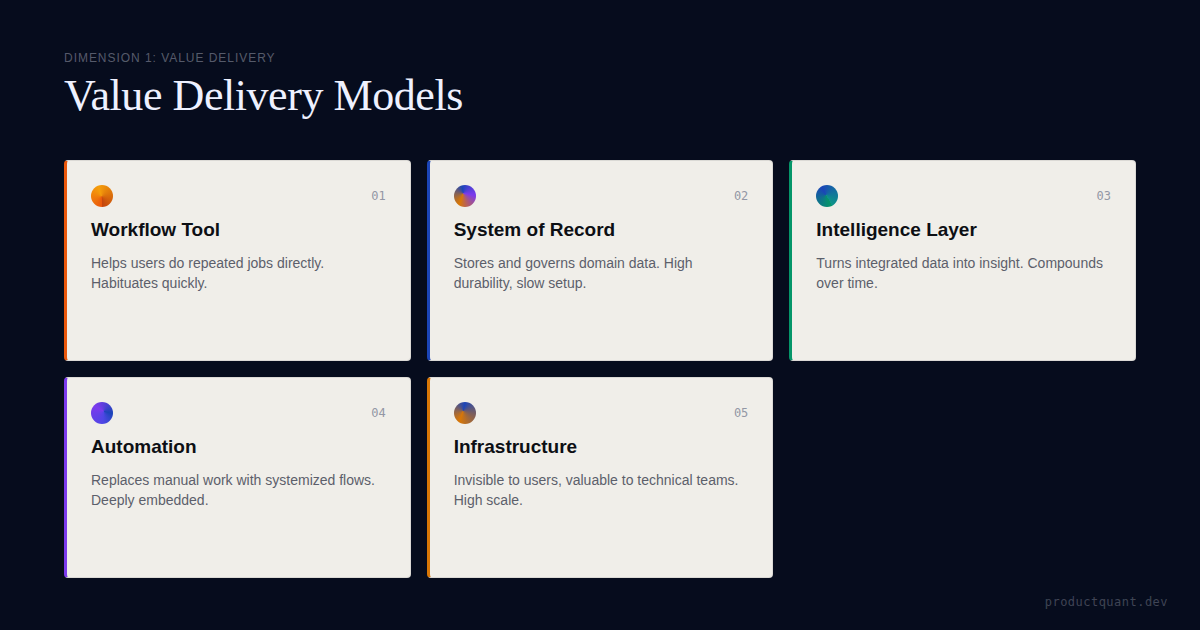
Workflow tools, systems of record, intelligence layers, automation platforms, and infrastructure products each create different defaults for growth.
The most dangerous pricing changes do not just hurt trust. They contradict topology, activation, moat strength, or buyer logic and hand competitors an opening.

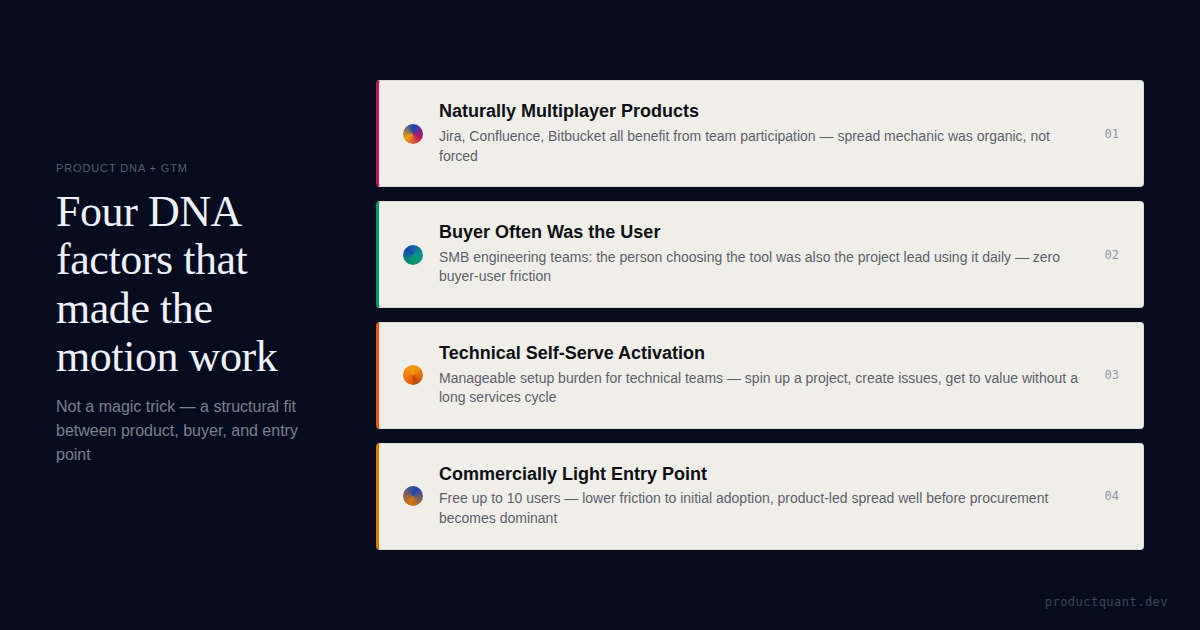
Atlassian did not prove that sales is unnecessary. It showed how long a low-friction, team-led, buyer-user-aligned product can stretch a lighter commercial motion.
Three famous PLG companies, three very different engines. This article breaks down the topology, viral loop, activation path, and moat behind each one.
NDR is not just a sales target. It is constrained by the product’s expansion model, and different models create different natural ceilings.
The right response to a cheaper competitor depends on the moat the product actually has, not the generic playbook everyone reaches for first.

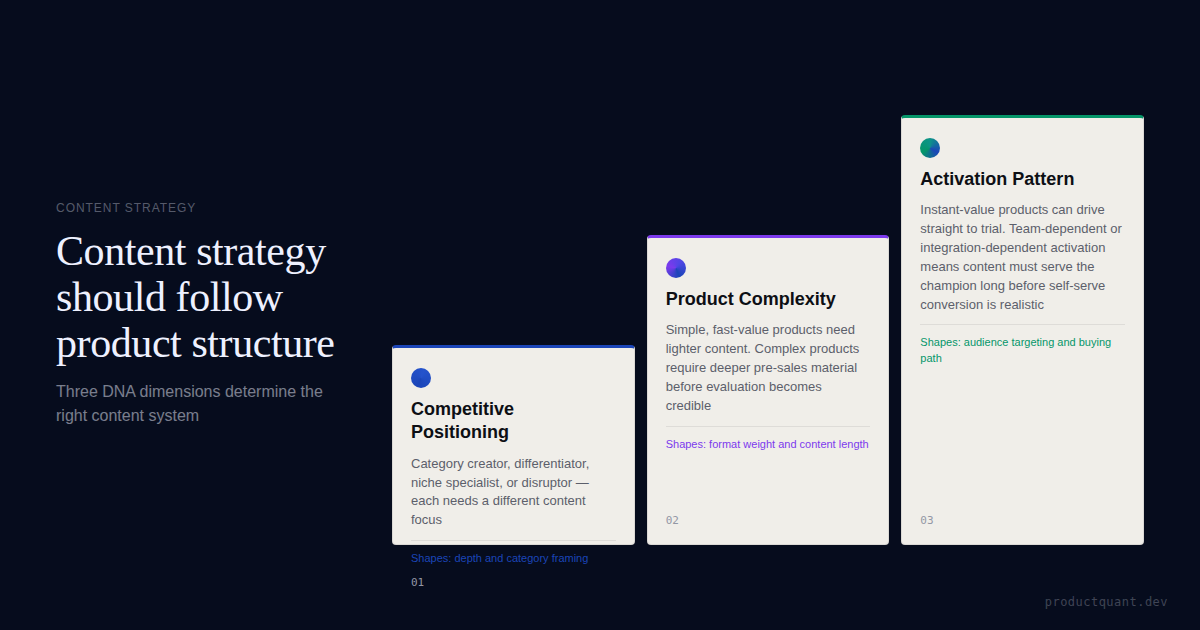
Content strategy should come from the product’s positioning, complexity, and activation pattern instead of default SaaS marketing templates.
A fast self-assessment for classifying value model, topology, pricing, activation, moat, expansion, and positioning before you choose the wrong playbook.

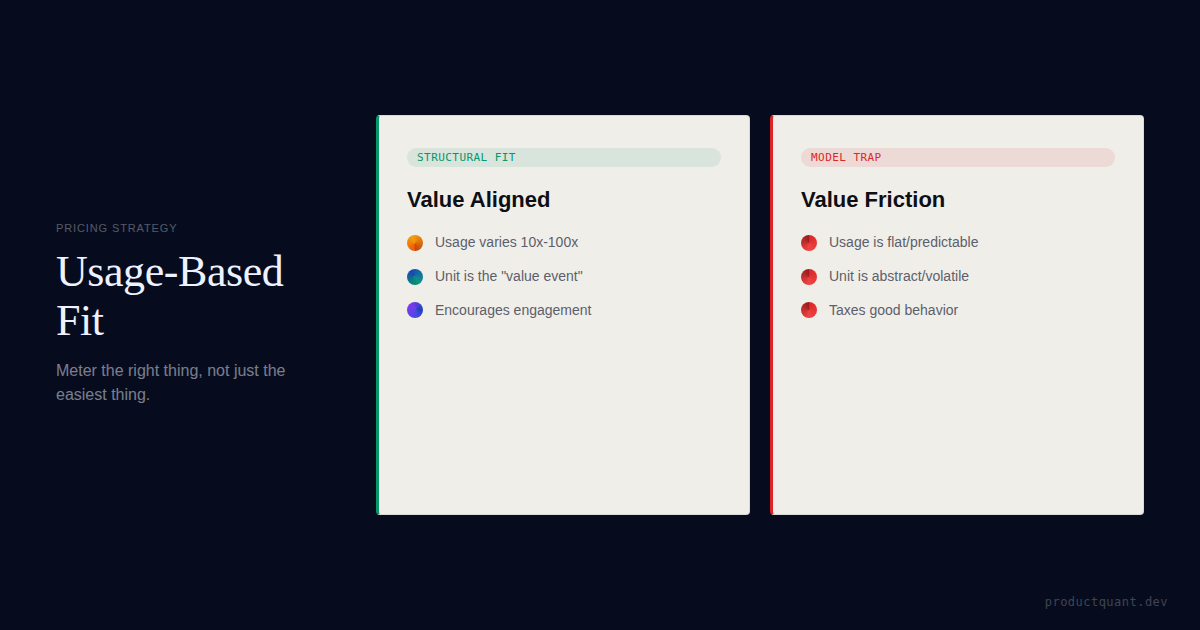
Usage-based pricing only works when consumption, value, and buyer tolerance line up. This article shows when the model fits and when it quietly breaks trust.

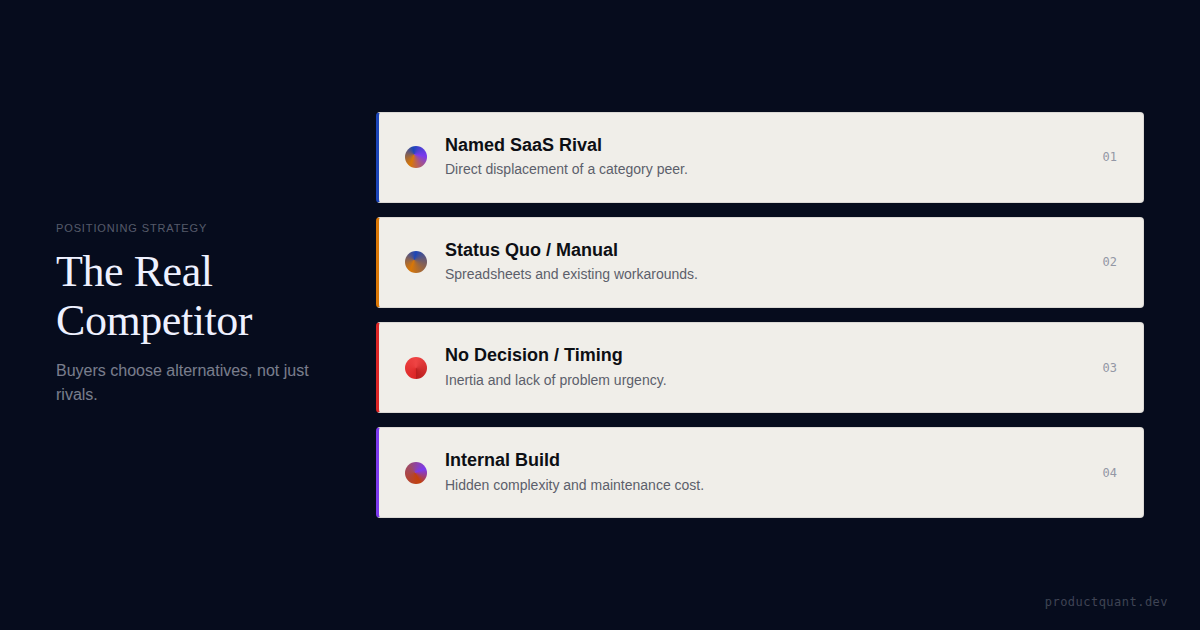
Most teams aim battle cards at the wrong target. This article shows how to find the real competitor from lost-deal data and stop fighting the wrong battle.

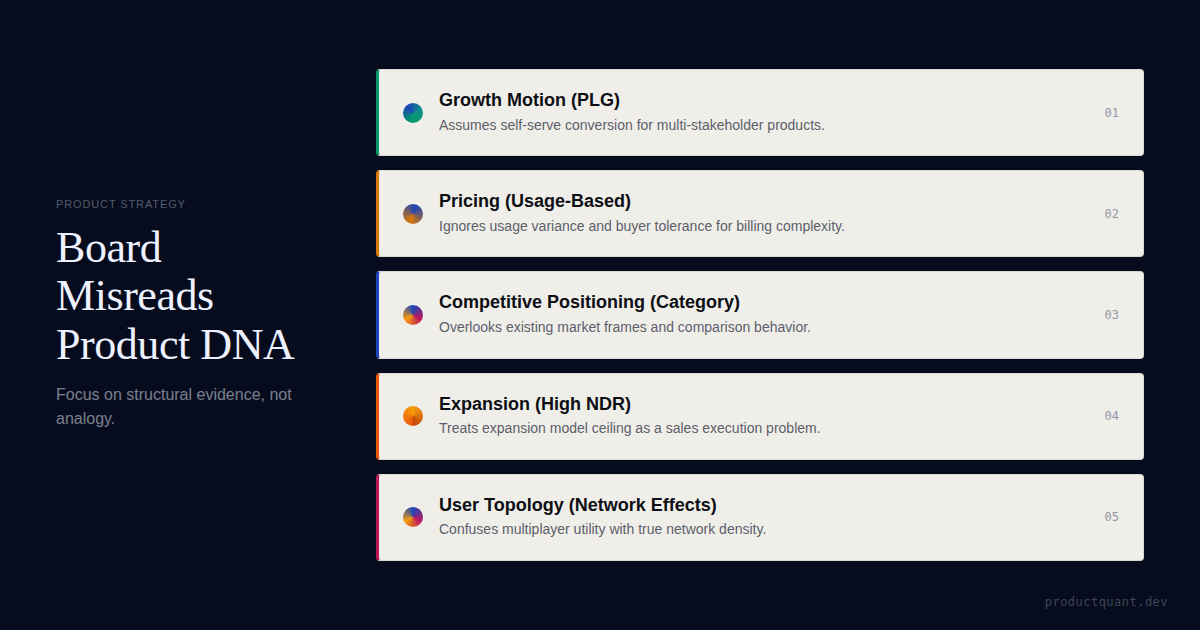
Boards often pattern-match from portfolio winners instead of reading the product in front of them. This article shows how to push back with structural evidence.

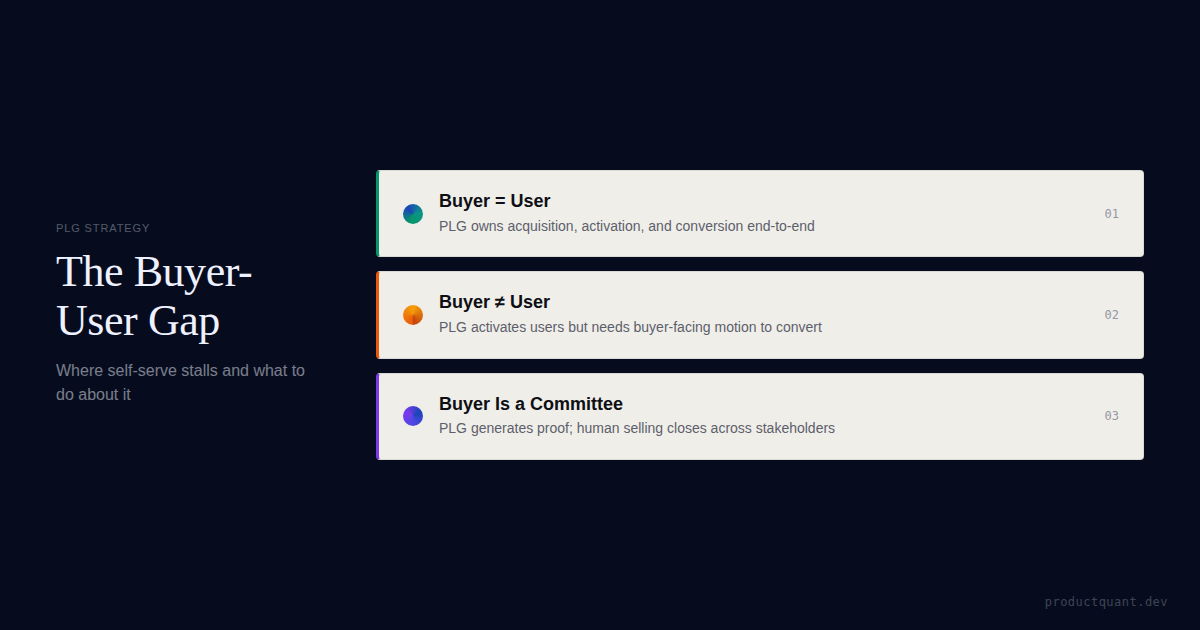
When the user who gets value is not the buyer, product-led growth often needs sales assist, buyer artifacts, and a different conversion design.

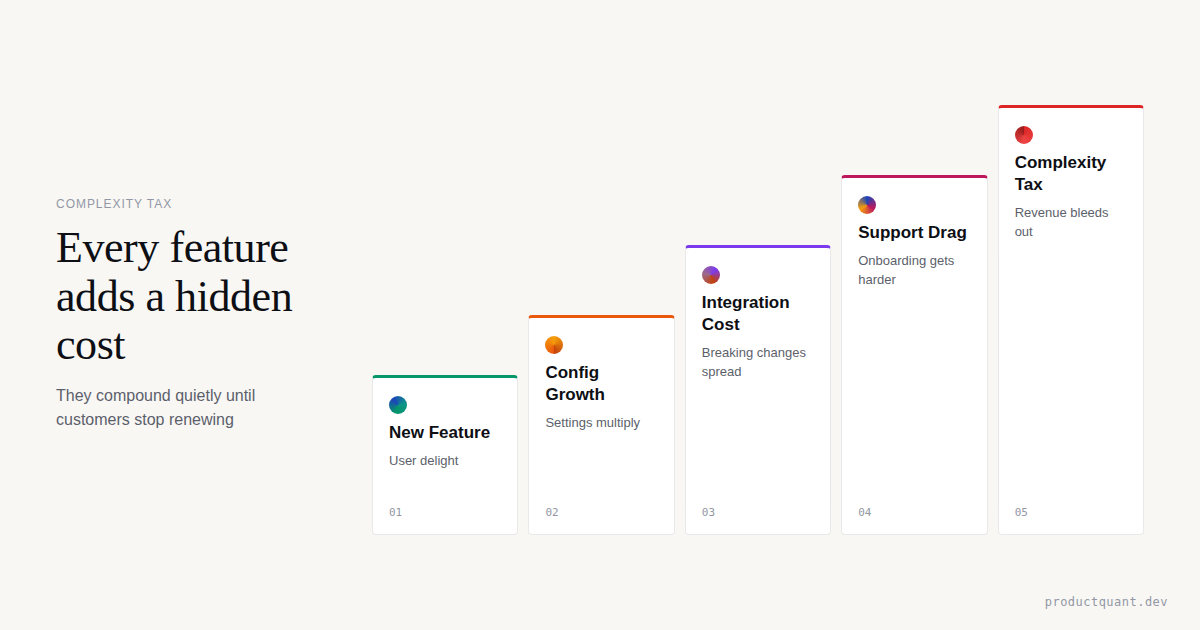
Complex, slow-to-value products pay a hidden tax on PLG, content, onboarding, sales, and expansion. This article maps where that cost shows up.

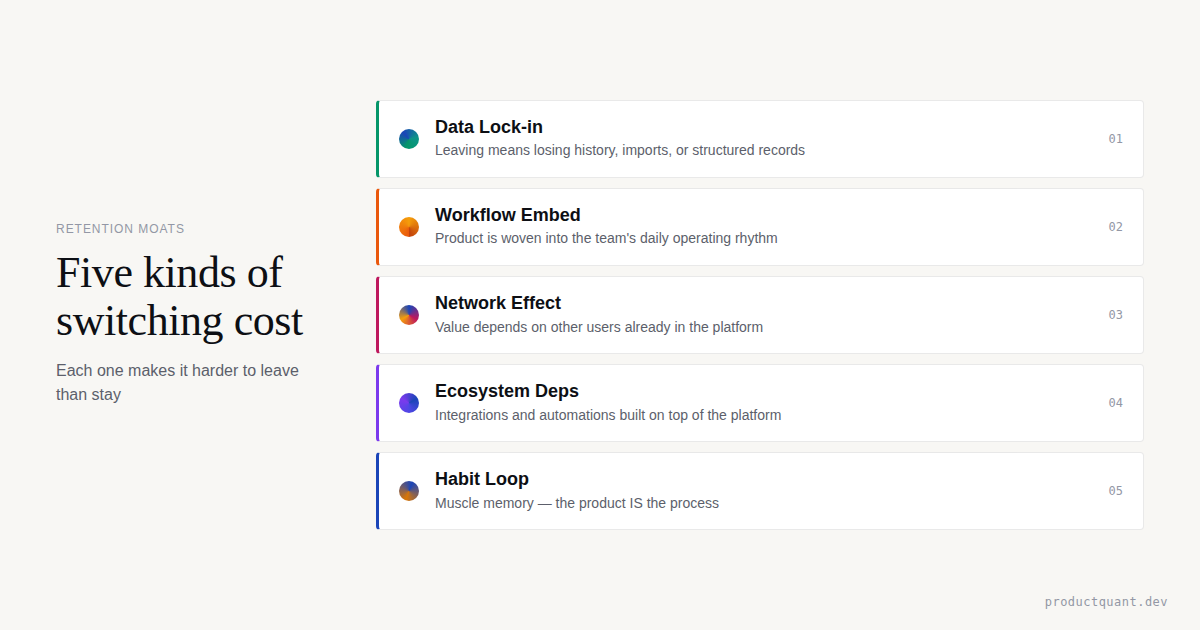
Retention is not just satisfaction. This article shows how to audit data lock-in, workflow embedding, network density, ecosystem lock-in, and habit loops more honestly.

Churn is not one problem. It is a composite of 7 structurally different failure modes — each requiring a different fix. Here is how to diagnose which archetype is actually driving your number.

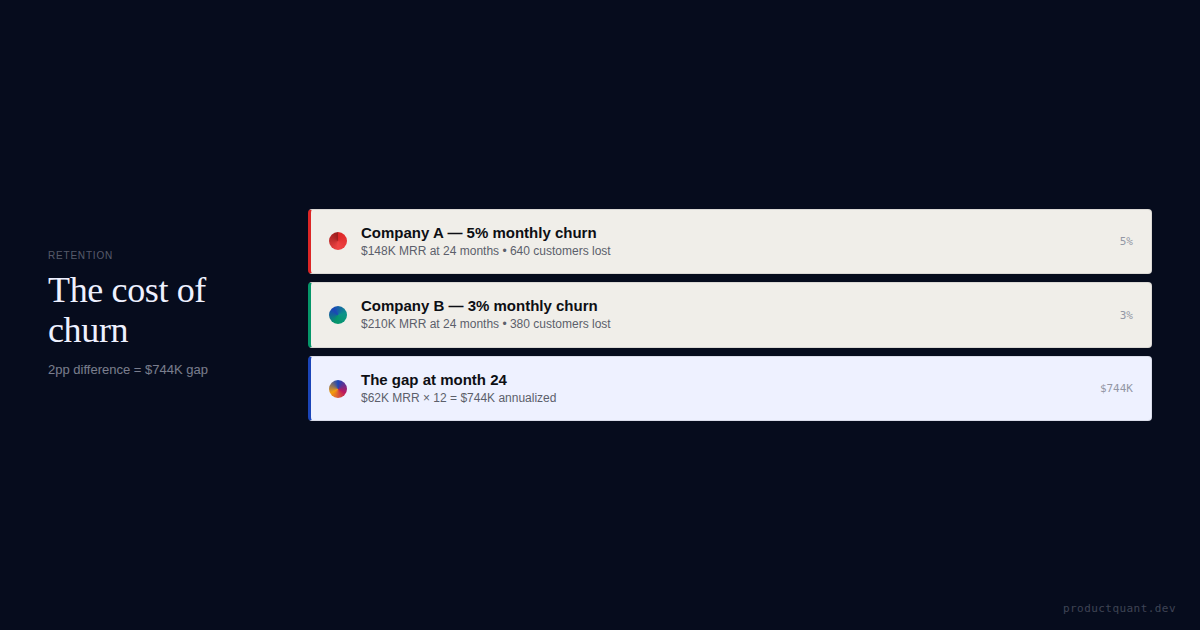
Two companies. Same acquisition engine. Same starting MRR. A 2pp monthly churn difference produces a $744,000 annualized revenue gap after 24 months. Here is the full cost-of-churn math.
Enterprise median NRR is 118%. Mid-market is 108%. SMB is 97%. Segmented benchmarks from SaaS Capital 2025, plus the three-lever framework for closing your gap.
Billing failures account for 20-40% of total SaaS churn. These customers want to stay — the payment just didn't go through. A two-week dunning system recovers 40-60% of them.
A complete dunning system has 5 components. Most SaaS teams are only running one. The full implementation guide: retry logic, Card Updater, pre-expiry notifications, failure-specific sequences, and recovery measurement.
Most SaaS companies publish the same content and run the same motion. This article maps content, GTM, and competitive response back to product structure.

Most trial problems are activation-pattern mismatches. This article shows how to match trial length, onboarding, and time-to-value to the way your product actually reaches value.
Per-seat pricing on a single-player product is flat-rate with extra steps. This article shows how to match pricing model, value delivery, and expansion logic before you keep tuning the pricing page.

PLG is a structural outcome, not a default growth playbook. If buyer, user, activation, and upgrade mechanics do not line up, self-serve signups become a distraction instead of a motion.

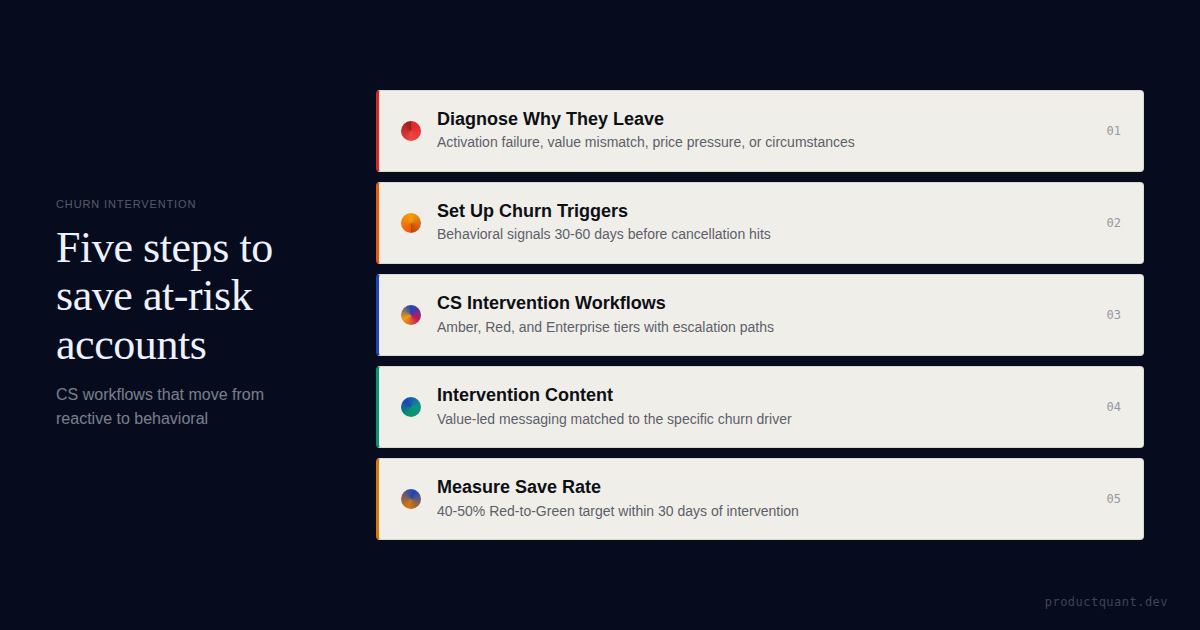
Complete churn intervention playbook for B2B SaaS. CS workflows, trigger-based outreach, save rate benchmarks, and real examples.
Stop tracking vanity metrics. Learn the 2026 multi-dimensional framework for SaaS customer health scores. Predictive telemetry, sentiment analysis, and JTBD alignment.
Decide between Free Trial and Freemium for your SaaS. Learn the 2026 framework based on ACV, TTV, and AI compute costs.
Hire the right GTM consultant for your SaaS. Learn the difference between Marketing Agencies and Revenue Architects, current 2026 pricing, and vetting logic.
Master B2B SaaS GTM in 2026. A technical guide to Warehouse-First architecture, Product-Led Sales, and Generative Engine Optimization (GEO).
PLG consultants charge $100–$500/hour or $7K–$50K/month. A complete buyer's guide to vetting, scoping, and getting value from a PLG engagement.
Increase your SaaS activation rate by 15–20%. Learn to identify your activation milestone, instrument behavioral events, and build trigger-based onboarding flows.
Stop guessing why users leave. Learn the RFM framework for SaaS churn reduction. 2026 benchmarks, behavioral segments, and 90-day intervention flows.
Stop building features, start solving jobs. Technical guide to the JTBD Dashboard Template using Outcome-Driven Innovation (ODI) and Opportunity Scores.
Stop tracking vanity metrics. Learn the technical PLG dashboard template for PostHog. Move beyond logins to HogQL-powered TTV, group-level retention, and PQL velocity.
Implement Product-Led Growth without breaking your revenue engine. A technical 12-week roadmap for building unified identity, reverse ETL activation, and usage-based monetization.
Most B2B SaaS teams track the wrong PLG metrics. Here are the 8 metrics that actually predict growth: activation rate, time-to-value, PQLs, and more.
Master B2B SaaS onboarding. A technical checklist for building zero-friction entry, intent-based routing, and behavioral activation milestones in 2026.
PLG strategy differs by funding stage. Series A focuses on activation (20–40%), Series B on expansion (NRR 120%+). Complete benchmarks and tactics.
Master PostHog Autocapture. Technical guide to setting up snippets, reverse proxies, and autocapture exceptions for clean, reliable SaaS analytics in 2026.
Build a product-led growth engine in PostHog. Technical guide to attribution persistency, PQL scoring engines, and reverse ETL workflows for B2B SaaS.
Master state-of-the-art SaaS retention. Technical guide to Graph Transformers, XGBoost, and Deep Survival Analysis for churn prediction in 2026.
Stop SaaS churn using PostHog. Technical guide to building an early warning system with HogQL, session replay triggers, and behavioral workflows.
A technical deep-dive into PostHog experimentation. Setup feature flags, calculate sample sizes, and use HogQL for advanced experiment analysis.

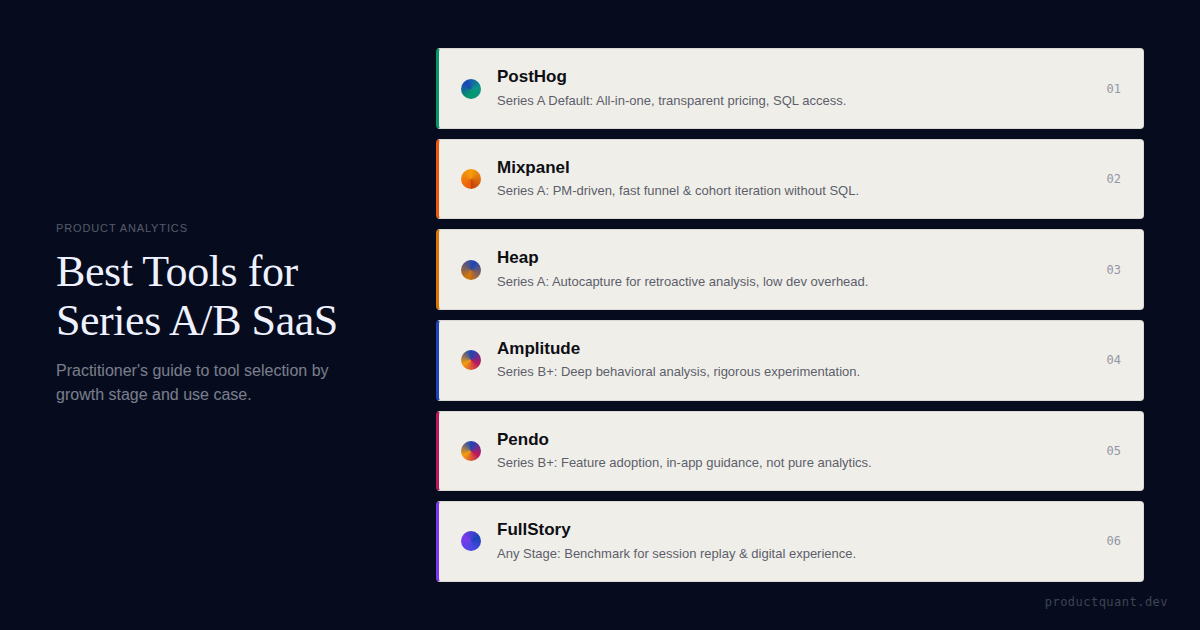
PostHog, Amplitude, Mixpanel, Heap, Pendo, FullStory — not a feature comparison matrix. What I'd actually recommend afte...
Compare growth agencies, fractional CPOs, and in-house teams across cost, capability, and timeline. An honest decision f...
Choosing between PostHog and Amplitude? This in-depth guide compares both platforms across Seed, Series A, and Growth st...
Three things that actually matter when choosing between PostHog and Mixpanel: data retention (7 years vs 2 years), prici...

An honest comparison of product analytics agency vs. in-house team. Real cost numbers, capability gaps, when each model makes sense, and a decision framework by ARR stage.
An honest guide to fractional Chief Product Officers. Scope, limitations, engagement models, ideal use cases, and when a full-time CPO is the better choice for your B2B SaaS.
Decide if a PLG agency is right for your SaaS. Learn what they do, red flags to avoid, when in-house is better, and get a decision framework to grow product-led.
PLG isn't a switch you flip. It's 8 structural capabilities. Learn what separates real product-led growth from freemium with hopium — and how to build the hybrid that actually works.
Real pricing data, data retention, HIPAA, SQL access, and group analytics — a practitioner's comparison of PostHog, Amplitude, and Mixpanel from an actual client engagement with 1M+ events/month.

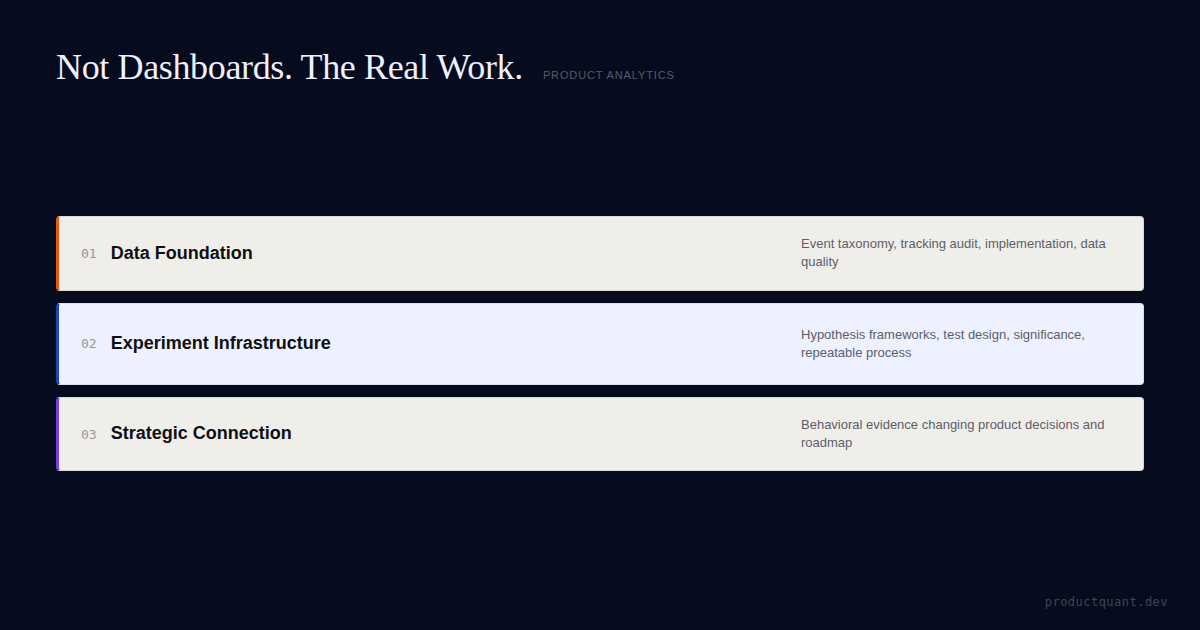
Discover what a product analytics consultant actually does — beyond dashboards. Event taxonomy, experiment design, growth systems, and when to hire vs. build in-house.

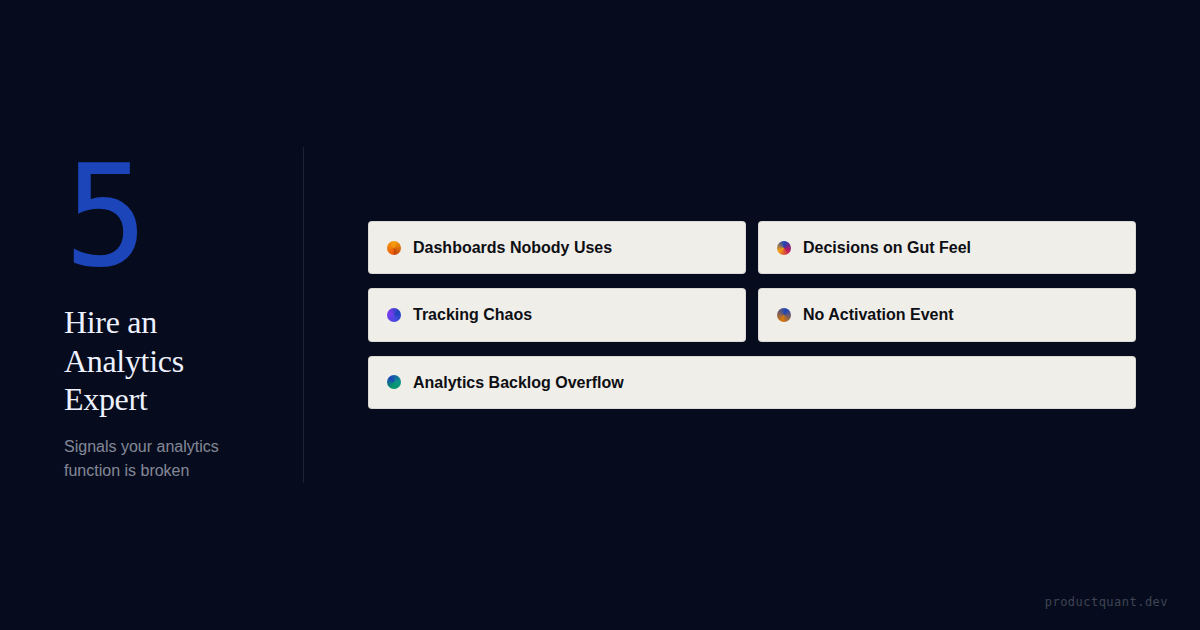
Dashboards nobody reads. Decisions made on gut feel. Tracking that nobody owns. Here's how to know you need a product analytics expert — and how to hire the right one.
Free activation teardown — 30 minutes, one high-confidence fix, no commitment.